
Date: July 17–18, 2025
What happened:
Global investment banking heavyweight Citigroup (Citi) has officially downgraded its stance on Indian equities from “Overweight” to “Neutral”. The decision reflects a shift from bullish optimism to more measured caution in the near term.
1. Why the Downgrade?
🔺 Elevated Valuations
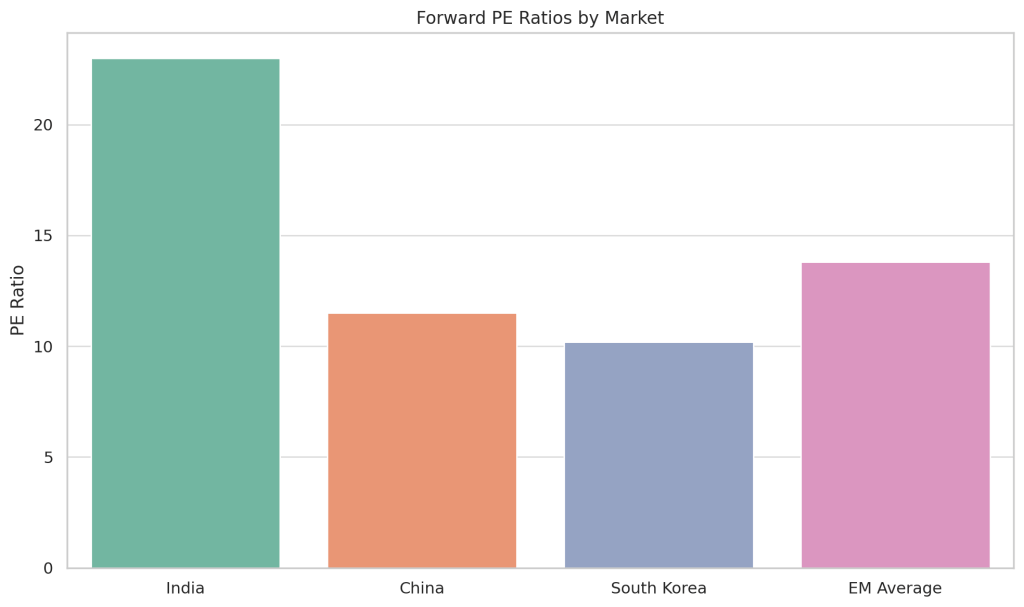
- India now trades at a steep premium — around 23× forward earnings, considerably higher than both its historical levels and other emerging peers .
- Citi points out that such “stretched valuations” reduce the margin for error if corporate earnings disappoint .
📉 Earnings Growth Slowing
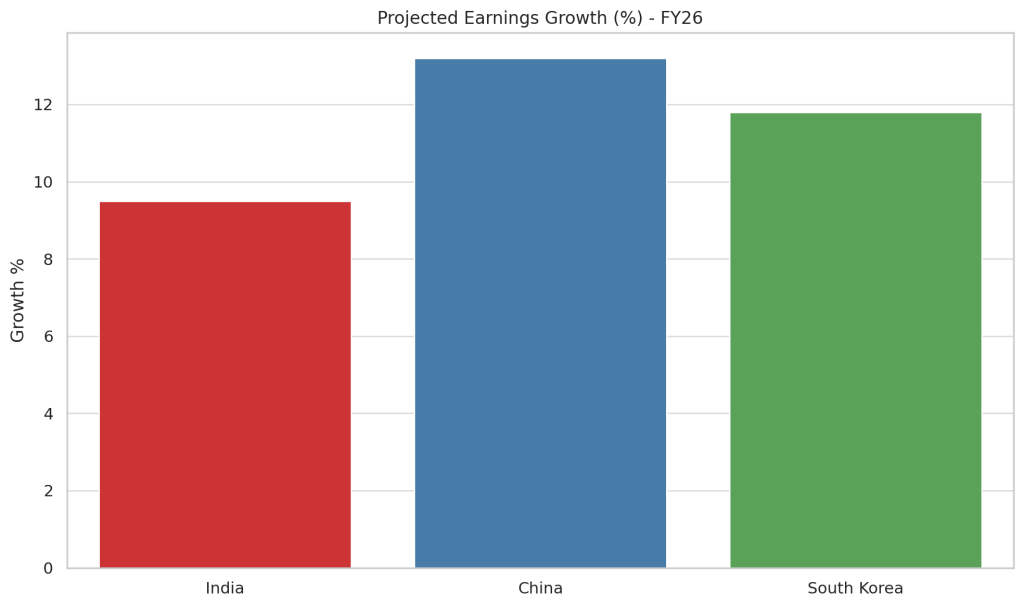
- While macro fundamentals (tax cuts, capex push, monetary easing) remain constructive, earnings growth has tapered.
- Citi suggests India’s earnings outlook is no longer exceptional, losing its edge compared to markets like China and South Korea
⚠️ Sector-Specific Concerns
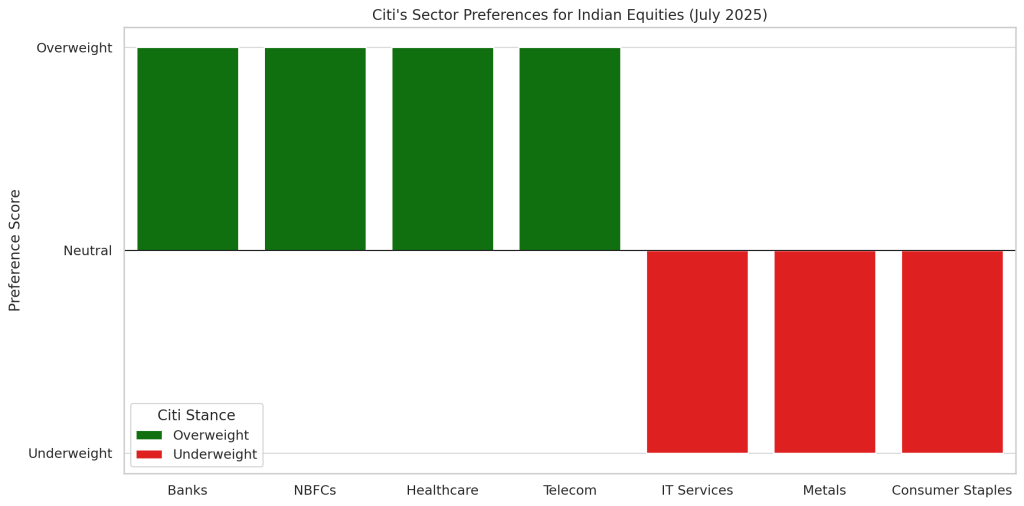
- Underweight stance on IT services, metals, and staples due to weak earnings revision trends.
- Preference for banks, NBFCs, healthcare, and telecoms, which maintain stronger fundamentals
🌐 External Pressures
- Ongoing global headwinds—subdued IT revenue, uncertainty over the US-India trade deal, and geopolitical tensions—contribute to lingering caution
2. Broader Context: Asia in Focus
- While India is downgraded, Citi recently upgraded China and South Korea to Overweight, citing better earnings momentum and more compelling valuations (China tech stocks are up ~20% YTD)
- Markets like South Korea benefit from a rebound in semis and export strength; China is seeing renewed investor interest in tech .
- India, by contrast, no longer offers a standout earnings growth narrative against this backdrop.
3. What This Means: Market & Investor Implications
📌 Market Outlook
- A Neutral call means Citi expects moderate returns, likely in line with global EM averages, rather than robust outperformance.
- With high valuations, any earnings miss or global trigger could pressure the markets.
💸 Foreign Investment
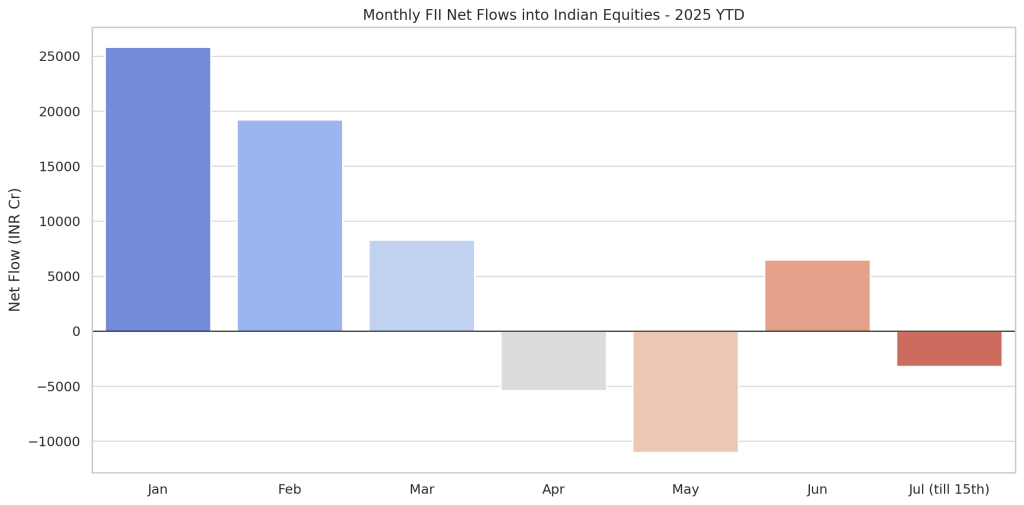
- Could prompt rebalancing by global investors—some may cycle out of India into more attractive EM names (e.g., China, SK), dampening inflows.
- Weak IT results and trade jitters may add to foreign fund outflows
🏦 Sector Rotation
- Citi favors banks, NBFCs, healthcare, telecoms—investors might shift exposure accordingly.
- Conversely, IT, metals, and consumer staples could remain out of favor in the near term.
🔄 Sentiment & Price Action
- A cooling in sentiment is possible, especially if corporate earnings fail to impress or macro risks reemerge.
- However, any positive triggers—like a favorable US trade deal, robust Q2 earnings, or supportive global liquidity—could re-anchor sentiment and lift markets even at rich valuations
4. Takeaways for Readers
| Insight | Commentary |
|---|---|
| Valuation vigilance | India trades at a premium – high expectations mean weaker room for error. |
| Earnings checks matter | Watch Q2 earnings guidance and margin trends, especially in tech and banks. |
| Global comparison | India no longer the standout relative to China/SK; earnings momentum counts. |
| Strategy shift | Investors might pivot into favored sectors (banks, healthcare) and regions. |
| Be ready for triggers | Sentiment could quickly reverse on trade deals, Fed cues, or corporate surprises. |
🔚 Conclusion
Citi’s downgrade marks a strategic recalibration, not a bearish prediction. While India’s macro backdrop remains sound, its rich valuation and softening earnings narrative call for caution. For investors, this is a signal to tread more carefully, emphasize stock and sector selection, and remain alert to global catalysts.
In a market now tethered to high expectations, discipline and flexibility will be crucial. India isn’t off the radar—it’s just no longer the standout pick.
(Sources: http://www.theeconomictimes.com, http://www.moneycontrol.com, http://www.niftytrader.com, and http://www.outlookbusiness.com)


Leave a Reply