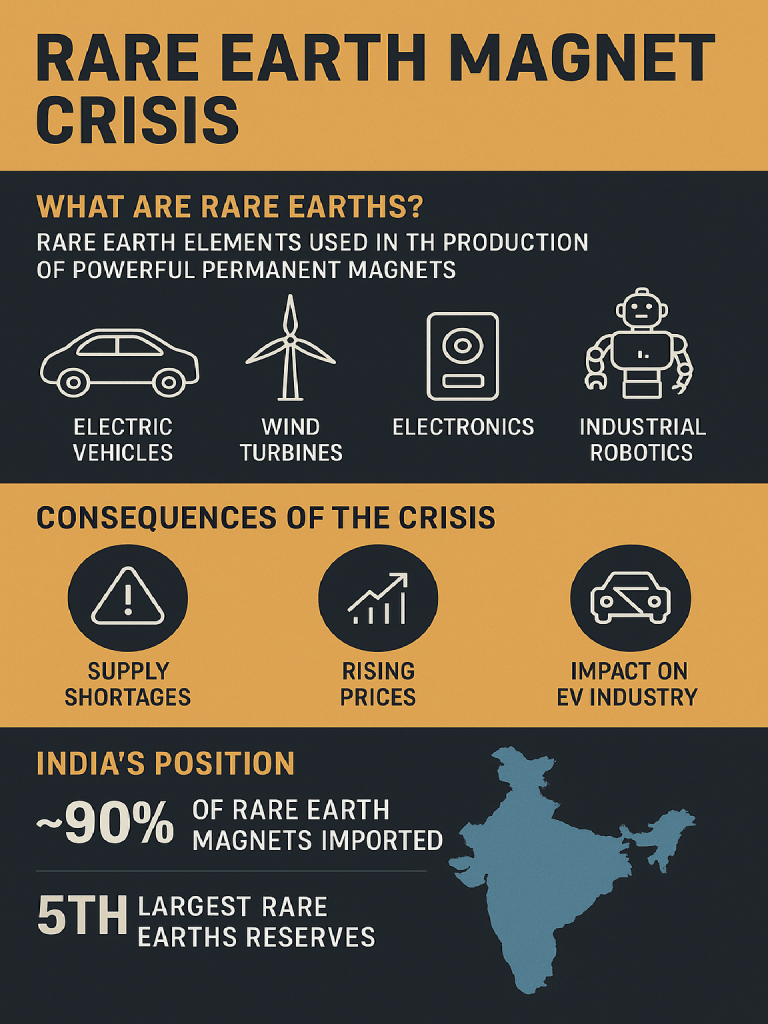
The global transition toward clean energy, electric vehicles (EVs), and advanced electronics is being powered — quite literally — by tiny but critical components called rare earth magnets. However, a brewing crisis around their availability and supply chain is causing significant concern across industries and nations alike. In this article, we break down what the rare earth magnet crisis is, why it matters, how it impacts the electric vehicle (EV) industry, and what it means for India’s strategic and economic interests.
🔍 What is the Rare Earth Magnet Crisis?
Rare earth magnets, especially neodymium-iron-boron (NdFeB) magnets, are powerful permanent magnets used in a wide range of high-tech and green technologies — from EV motors and wind turbines to smartphones and medical equipment.
The crisis refers to growing fears of:
- Supply shortages, particularly of key rare earth elements like neodymium, praseodymium, dysprosium, and terbium.
- Overdependence on China, which accounts for more than 80% of global rare earth magnet production.
- Geopolitical tensions and export restrictions, further threatening global access to these critical materials.
- Environmental and social costs associated with rare earth mining and processing.
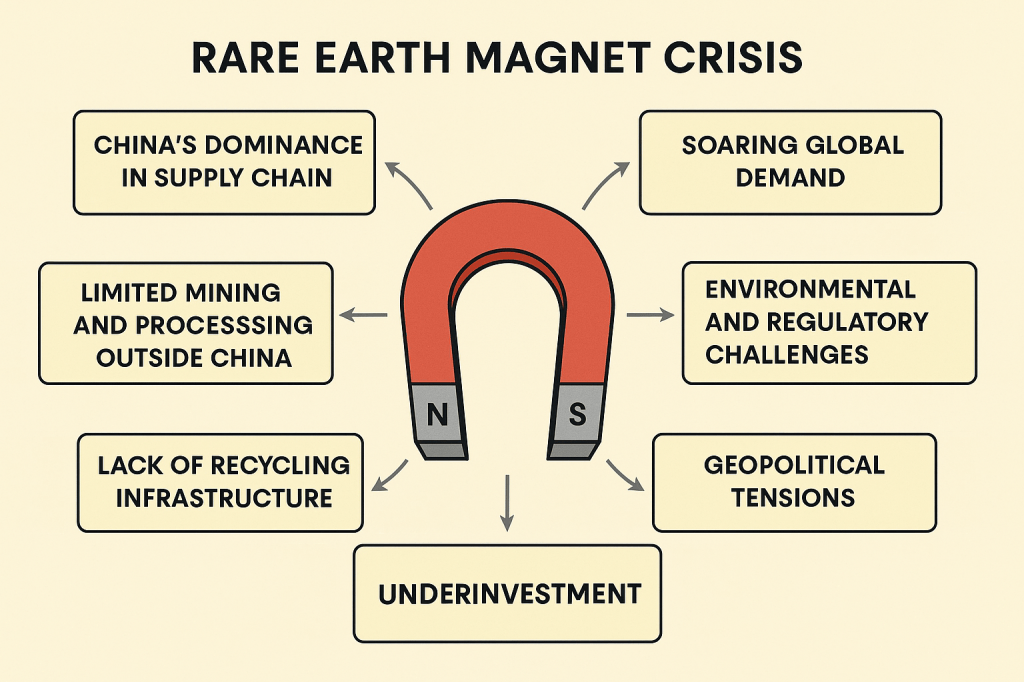
Causes for the Crisis
1. China’s Dominance in Supply Chain
- China controls ~84% of global rare earth magnet production, from mining to refining and magnet manufacturing.
- It has restricted exports in the past and recently imposed export licensing requirements on critical materials like gallium and germanium, raising fears of similar actions for rare earths.
2. Soaring Global Demand
- Demand is skyrocketing due to:
- Electric Vehicles (EVs)
- Wind turbines
- Consumer electronics
- Defense and aerospace
- According to estimates, demand for NdFeB magnets could double by 2030, creating supply-demand mismatches.
3. Limited Mining and Processing Outside China
- Although many countries (including India, the U.S., and Australia) have rare earth reserves, they lack processing and magnet-making capabilities.
- Rare earth processing is technically complex and environmentally hazardous, requiring heavy investment and expertise.
4. Environmental and Regulatory Challenges
- Rare earth mining causes radioactive waste, groundwater pollution, and ecosystem damage.
- As a result, countries have been slow or reluctant to develop domestic facilities due to stringent environmental regulations.
5. Lack of Recycling Infrastructure
- Only a small percentage of rare earths are recycled from end-of-life electronics or EVs.
- The lack of a circular economy model adds pressure on virgin material extraction
6. Geopolitical Tensions and Weaponization of Supply
- As geopolitical rivalries intensify (e.g., US-China trade tensions), rare earths are increasingly viewed as a strategic asset.
- There’s fear that China could weaponize its monopoly in the event of conflict or sanctions, disrupting global supply.
7. Underinvestment in Upstream and Downstream Ecosystem
- Most countries haven’t invested enough in:
- Rare earth mining & refining
- Magnet manufacturing
- R&D for substitutes or alternatives
- Workforce and technical capacity building.
⚠️ Consequences of the Rare Earth Magnet Crisis
- Supply Chain Disruptions
Industries relying on rare earth magnets face uncertainty in production planning, pricing, and delivery timelines. - Rising Prices of Rare Earth Materials
Shortages and monopolistic control lead to inflated costs, impacting affordability across sectors — especially EVs and consumer electronics. - Stalled Green Energy Transition
Wind turbines, electric motors, and battery systems require rare earth magnets. Limited supply slows down progress toward climate targets. - Geopolitical Vulnerabilities
Countries without domestic rare earth capabilities risk strategic dependency, similar to energy dependence on oil in past decades. - Technological Nationalism and Trade Wars
Governments are scrambling to secure domestic supply chains, triggering resource nationalism and protectionist policies.
🚗 Is There a Direct Impact on the EV Industry?
Yes — and it’s significant.
EVs, particularly those using permanent magnet synchronous motors (PMSMs), rely heavily on rare earth magnets for their high power-to-weight ratio and efficiency. The crisis could result in:
- Higher production costs, making EVs more expensive for consumers.
- Reduced EV output, as automakers struggle to source magnets.
- Slowdown in EV adoption, derailing global net-zero goals.
- Forced redesign of motors, pushing manufacturers to shift to alternative (less efficient or heavier) motor technologies like induction motors or switch reluctance motors.
Major players like Tesla, Toyota, and BYD have already started exploring magnet-free or rare earth–reduced designs, but the transition isn’t seamless or cost-effective yet.
🏛️ What Should Governments Do?
To tackle the rare earth magnet crisis, governments across the world should adopt a multi-pronged strategy:
- Diversify Supply Chains
Invest in new rare earth mining and processing facilities in countries like Australia, the U.S., Canada, and India. - Support R&D for Alternatives
Fund research into magnet-free motor technologies and rare earth substitutes like ferrite-based magnets or recyclable materials. - Build Strategic Reserves
Just like oil reserves, stockpiling rare earth materials can cushion supply shocks. - Encourage Recycling & Urban Mining
Extract rare earths from used electronics, EV motors, and wind turbines to reduce pressure on primary sources. - Develop Green Processing Techniques
Create environmentally friendly methods to reduce the toxic waste associated with rare earth mining. - Foster International Cooperation
Forge partnerships and free trade agreements with rare earth-rich nations to ensure long-term access.
What Does This Mean for India?
India currently imports over 90% of its rare earth magnet requirements — primarily from China. However, India has significant rare earth reserves, but lacks the refining and magnet-making capabilities.
Key Implications for India:
- Strategic Vulnerability: India’s EV ambitions and defense technology depend on secure access to magnets.
- Economic Opportunity: India can become a rare earth refining hub if it invests in processing infrastructure and public-private partnerships.
- Policy Push Needed: The government must finalize its proposed rare earth policy that would allow private sector participation in mining and downstream industries.
- Job Creation & Atmanirbhar Bharat: Developing a domestic rare earth-to-magnet supply chain aligns with India’s self-reliance goals and green job growth.
India’s recent moves — such as setting up joint ventures through IREL (India) Ltd. and forging partnerships with countries like Australia — are steps in the right direction, but more decisive action is needed.
📌 Conclusion
The rare earth magnet crisis is a clear and present threat to the global green transition and technological advancement. Its ripple effects are already being felt across the EV industry and other critical sectors. For India, it presents both a risk and a rare opportunity — to secure its future as a green-tech powerhouse while reducing strategic dependencies.
Governments and industries must act swiftly, collaboratively, and sustainably to navigate this challenge — because the magnets at the heart of our modern lives are too important to ignore.
📊 Quick Facts & Stats
| Metric | Details |
|---|---|
| China’s Share in Global Magnet Output | ~84% |
| Global Rare Earth Market Size (2024) | $10.9 billion (estimated) |
| India’s Rare Earth Reserve Ranking | 5th largest in the world |
| Key Rare Earths in EVs | Neodymium, Praseodymium, Dysprosium |
| EVs Using PMSM Motors | >80% of global EVs (as of 2024) |


Leave a Reply