In the ever-evolving landscape of India’s taxation system, the Goods and Services Tax (GST) has been a cornerstone since its inception in 2017. However, as the economy matures, calls for simplification and rationalization have grown louder. The recent overhaul announced in early September 2025 marks a significant milestone, aiming to make the system more consumer-friendly while boosting economic growth. This article dives into the details of these changes and explores their profound impact on the Fast-Moving Consumer Goods (FMCG) sector—a vital part of everyday Indian life.
Understanding GST Rate Rationalization
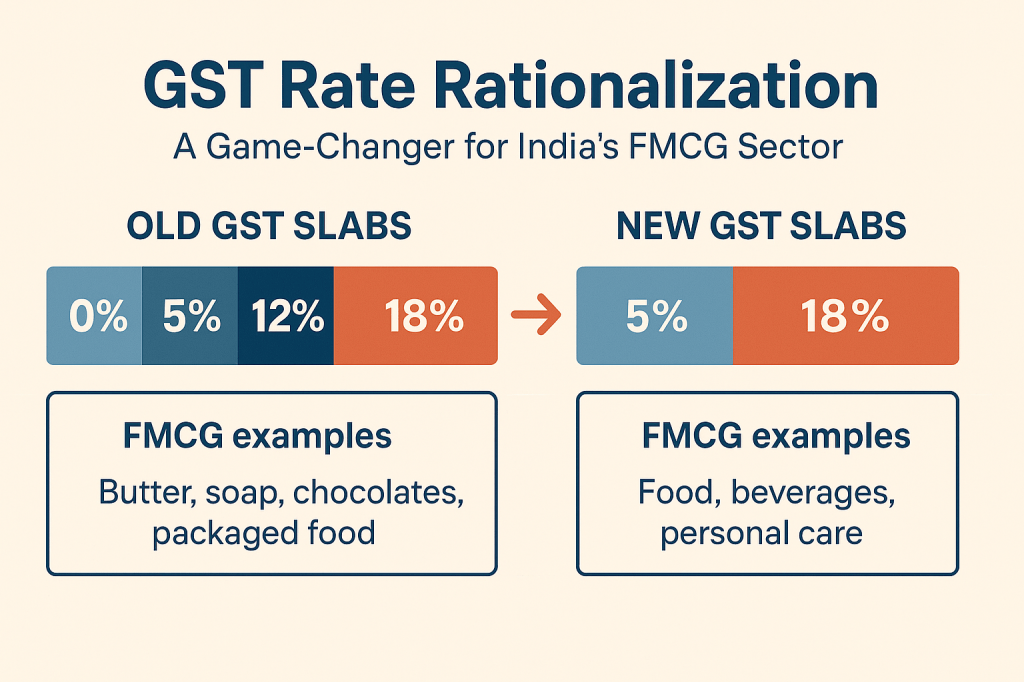
GST rate rationalization refers to the process of streamlining tax slabs to reduce complexity, minimize classification disputes, and enhance compliance. India’s GST originally featured multiple slabs: 0%, 5%, 12%, 18%, and 28%, plus a compensation cess on certain goods. This multi-tier structure often led to ambiguities and higher administrative costs.
The turning point came with the 56th GST Council meeting on September 3, 2025, where sweeping reforms were approved. These changes, effective from September 22, 2025, simplify the framework into a two-slab system: a merit rate of 5% for essentials and a standard rate of 18% for most goods and services. Luxury and “sin” goods, such as aerated drinks, tobacco products, and high-end vehicles, now fall under a 40% slab to discourage consumption while generating revenue.
Key highlights include:
- Exemptions Expanded: Items like Ultra-High Temperature (UHT) milk, pre-packaged paneer, and all types of Indian breads (e.g., chapati, roti, paratha) are now GST-free.
- Rate Reductions Across Categories: Many products previously taxed at 12% or 18% have shifted to 5%, including soaps, shampoos, toothpaste, hair oil, packaged namkeens, bhujia, sauces, pasta, chocolates, coffee, butter, and ghee.
- Sector-Specific Tweaks: In healthcare, most medicines dropped from 12% to 5%, with 33 life-saving drugs exempted entirely. Automobiles like small cars and two-wheelers moved from 28% to 18%.
This rationalization is part of the “Next-Gen GST Reforms,” designed to provide relief to the common man, stimulate demand, and support businesses amid post-pandemic recovery.
The Ripple Effect on the FMCG Sector
The FMCG sector, encompassing everyday essentials like food, beverages, personal care, and household items, stands to gain immensely from these reforms. With India’s FMCG market valued at over $100 billion and growing at a rapid pace, even small tax adjustments can trigger significant shifts in consumption patterns and profitability.
Lower Taxes, Cheaper Products
A wide array of FMCG items have seen drastic rate cuts, making them more affordable for consumers. Here’s a snapshot of updated rates for common products:
| Category | Examples | Old Rate | New Rate (Effective Sep 22, 2025) |
|---|---|---|---|
| Food Products | Butter, ghee, cheese, condensed milk, nuts, fruits, pasta, namkeens, bhujia, sauces, jams, fruit juices, soya milk drinks | 12% or 18% | 5% |
| Beverages | Aerated waters, caffeinated drinks | 28% | 40% |
| Hygiene Products | Hair oil, shampoo, toothpaste, soap bars, toothbrushes, talcum powder, baby napkins, clinical diapers | 12% or 18% | 5% |
These reductions are expected to lower end-consumer prices by 5-10% on average for essentials, particularly benefiting low- and middle-income households. For instance, the focus on Rs 5 and Rs 10 price points—staples in rural and urban markets—will make impulse buys more attractive, driving volume growth.
Boost for Major Players
FMCG giants are already gearing up to capitalize on these changes. Companies like ITC, Hindustan Unilever (HUL), Britannia, and Nestle have committed to passing on the full benefits to consumers, which could enhance their market share.
- ITC: Its food division, including nutritional products like Aashirvaad and Sunfeast, will become more affordable, potentially increasing sales volumes.
- HUL: Around 35% of its portfolio (soaps, shampoos, oral care, sauces, jams) now falls under 5% GST, allowing for price reductions and margin improvements through higher operating leverage.
- Britannia: A whopping 85% of its products, such as biscuits, cakes, and bread, have shifted to 5%, positioning it for significant gains in a price-sensitive market.
- Nestle: Categories like instant noodles, chocolates, and coffee will see reduced taxes, aiding in competitive pricing and demand uplift.
Analysts predict these moves will stimulate overall FMCG consumption by increasing disposable incomes, especially in rural areas where demand has been sluggish. Without an anti-profiteering clause in the new regime, companies have flexibility to balance price cuts with profitability, leading to potential margin expansion.
Broader Economic Benefits
For the sector as a whole, the reforms promise:
- Enhanced Affordability and Demand: Lower taxes on daily essentials could add momentum to India’s consumption story, which contributes over 60% to GDP.
- Simplified Compliance: The two-slab system reduces classification headaches, though businesses must navigate a 15-20 day transition period for Input Tax Credit (ITC) adjustments and credit notes for post-sale discounts.
- Supply Chain Efficiencies: Reduced rates on packaging materials and job work services will lower production costs, benefiting manufacturers and retailers alike.
However, not all is rosy. Aerated beverages moving to 40% might pressure companies like PepsiCo and Coca-Cola, potentially leading to higher prices and subdued growth in that sub-segment. Additionally, deferred implementation for tobacco products adds some uncertainty.
Challenges and the Road Ahead
While the rationalization is largely welcomed, the transition isn’t without hurdles. Traders who purchased stock at higher rates may face short-term losses, as refunds under the inverted duty structure are unavailable for the new 5% supplies. The government has eased some compliance norms for packaged goods, allowing revised MRPs without penalties during the switchover.
Looking forward, these reforms align with India’s vision of a simpler, more equitable tax system. By focusing on essentials, they not only alleviate inflationary pressures but also foster inclusive growth.
Conclusion
The 2025 GST rate rationalization is a bold step toward making taxation work for the people. For the FMCG sector, it’s a catalyst for revival—empowering consumers with savings and businesses with opportunities. As these changes roll out from September 22, keep an eye on how prices adjust at your local store. If you’re in FMCG or a savvy shopper, this could be the start of a more affordable era. What are your thoughts on these reforms? Share in the comments below!


Leave a Reply