Introduction
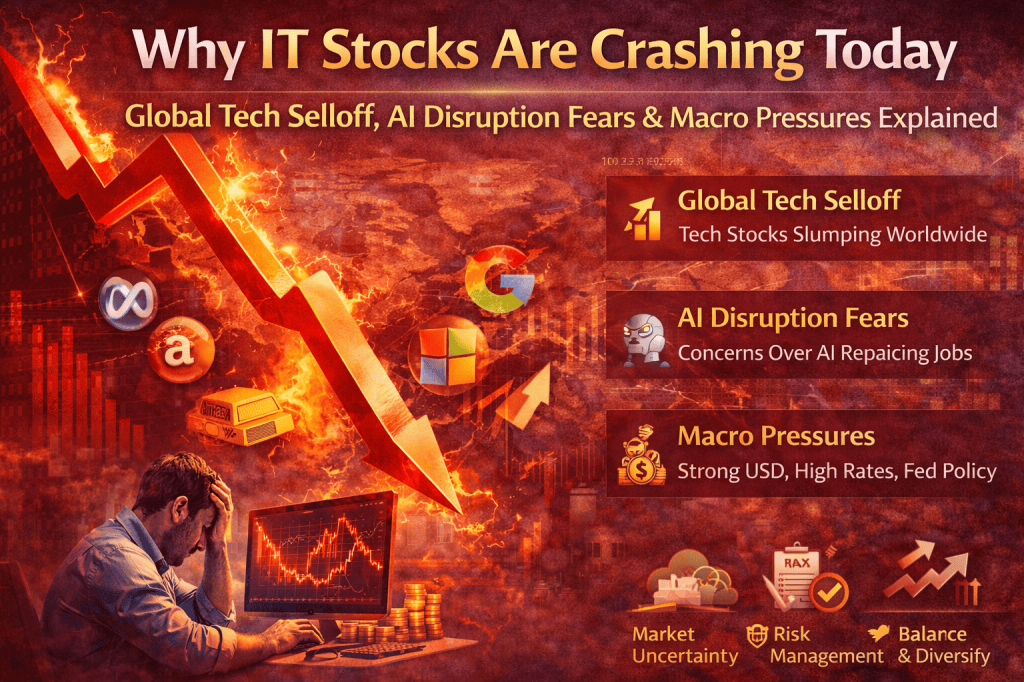
On February 12, 2026, global financial markets saw a sharp decline in technology and IT sector stocks — a move that hit major indices worldwide and dragged down India’s benchmark markets as well. The tech selloff was not a random event; instead, it was triggered by a confluence of structural, macroeconomic, and sentiment-driven factors that unnerved investors across geographies. (The Week)
1. Global Technology & Software Stocks Under Pressure
Even before India’s markets opened, international equities were in retreat — especially in software, SaaS, and technology services:
- Massive sell-offs wiped out significant market cap in global software stocks, as investors grappled with the implications of rapid advances in artificial intelligence and automation. (Reuters)
- Broader global equities indices slid as traders reassessed risk-reward dynamics in high-growth tech names amid market volatility. (Reuters)
This global selloff created adverse opening conditions for emerging markets and export-oriented sectors, including IT. Institutions and algorithmic trading models quickly pushed tech-linked stocks lower in a correlated fashion.
2. AI Disruption Fears Are at the Center of the Rally Turned Selloff
The most talked-about trigger is a wave of AI developments — particularly the launch of advanced AI tools by companies like Anthropic (backed by Amazon and Google) that can automate complex business functions:
- These tools not only assist with tasks but are capable of replacing human workstreams such as legal review, data processing, and back-office workflows. (The Times of India)
- Traditionally, India’s IT sector has thrived on a headcount-based outsourcing model — selling hours of human expertise to global clients. The idea of AI reducing that need spooked investors and injected a narrative of potential future revenue loss. (The New Indian Express)
While AI is also creating new opportunities, the short-term reaction has been to price in the risk of reduced demand for traditional services delivered by firms like Infosys, TCS, HCLTech, and Wipro.
3. Macro Pressures: U.S. Jobs Data & Interest Rates
Another major catalyst behind the downturn was economic data from the United States:
- Stronger-than-expected U.S. employment numbers dampened hopes of near-term interest rate cuts by the Federal Reserve. (Business Today)
- Higher or sticky rates make growth stocks (like tech and IT) less attractive because future earnings — the backbone of their valuations — are discounted more heavily. (The Economic Times)
Since Indian IT companies derive a large share of revenue from developed markets like the U.S., changes in economic expectations abroad have direct valuation implications domestically.
4. Foreign Institutional Investor (FII) Flows and Risk Sentiment
Market sentiment matters:
- When global risk appetite weakens, FIIs often reduce exposure to equities, particularly in emerging markets.
- IT stocks — which tend to be high-beta and sensitive to global cues — get sold faster than defensive sectors.
- Profit-booking after recent gains contributed to further selling pressure. (The Economic Times)
5. Impact on Indian Markets
The combined effect of these global and domestic triggers has been particularly pronounced in India:
- The Nifty IT index plunged over 5% and hit near multi-month lows, dragging down broader indices like the Nifty 50 and BSE Sensex. (Reuters)
- Major IT bellwethers — TCS, Infosys, HCLTech, and others — faced sharp declines ranging from 4% to 6% or more. (The Times of India)
- Commentary from market analysts emphasizes both macro headwinds and longer-term structural concerns due to automation. (Business Today)
6. Is This a Structural Shift or Short-Term Overreaction?
Market interpretations diverge:
- Pessimistic View: AI tools could significantly erode demand for traditional IT services, compress margins, and challenge long-standing outsourcing models.
- Moderate View: While automation will reshape parts of the industry, human oversight and complex domain expertise remain difficult to replace, and many regulated sectors will still rely on traditional IT services. (MarketScreener)
Thus, some analysts argue the selloff might be overdone in the short term, while others caution that this could be the start of a structural shift in the sector’s growth trajectory.
Conclusion
The crash in global and Indian IT stocks today reflects a blend of technological disruption risks, macroeconomic uncertainty, and shifting investor sentiment. It is not just one news headline but a broader reassessment of how technology companies will grow in an era of automation and evolving cost structures. While these concerns are valid, discerning long-term investors might view this as a market correction rather than an outright collapse — depending on how Indian IT companies adapt to the changing landscape.
Disclaimer
The information in this post is for educational and informational purposes only. It does not constitute financial, investment, or trading advice. Stock market investments are subject to market risk. Readers should consult a qualified financial advisor before making any investment decisions.


Leave a Reply