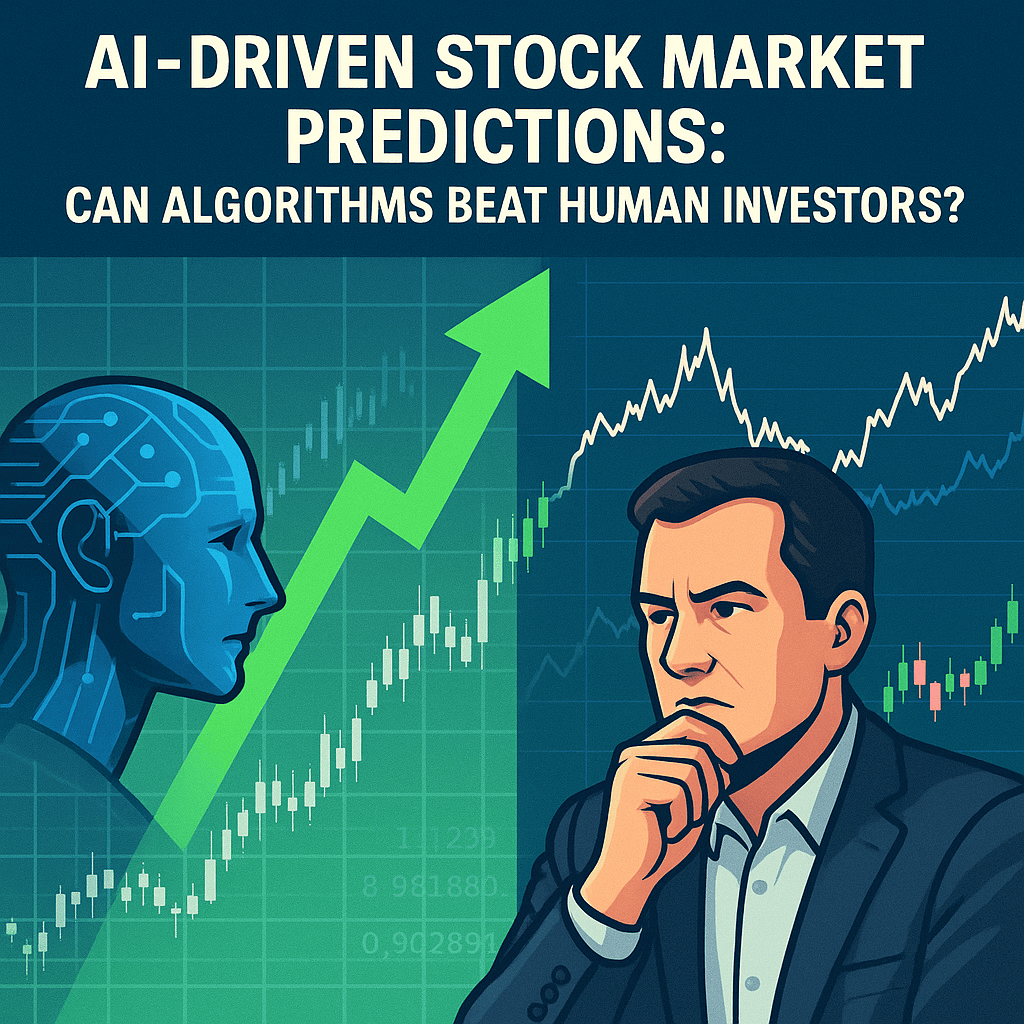
The stock market, a chaotic swirl of numbers, emotions, and global events, has long been a battleground for human intuition and analytical prowess. Enter artificial intelligence (AI), a game-changer that’s reshaping how trades are made, risks are managed, and profits are chased. From quant funds to algorithmic trading strategies, AI is no longer a futuristic gimmick—it’s a powerhouse driving billions in trades. But can algorithms truly outsmart human investors? Let’s dive into the world of AI-driven stock market predictions and see if silicon beats synapses.
The Rise of AI in Trading
AI’s infiltration into finance began with simple rule-based algorithms, but today’s systems are far more sophisticated. Machine learning (ML), neural networks, and natural language processing (NLP) enable AI to analyze vast datasets—price histories, earnings reports, news sentiment, even X posts—in real time. Unlike humans, AI doesn’t get tired, emotional, or distracted by a bad day. It thrives on data, spotting patterns invisible to even the sharpest traders.
Take Renaissance Technologies’ Medallion Fund, a quant fund that’s legendary for its returns. Since the 1980s, it’s leveraged mathematical models and early AI to achieve annualized returns above 60% before fees, according to reports. While Renaissance keeps its sauce secret, it’s widely believed that ML models crunching esoteric data—like weather patterns or shipping logs—give it an edge. This isn’t your grandpa’s stock-picking; it’s data-driven warfare.
AI’s advantage lies in scale and speed. It can process millions of data points—say, every trade on the NYSE in a millisecond—while humans struggle to skim a single earnings call. NLP models, for instance, parse news articles or X posts to gauge sentiment on a company faster than any analyst. In 2023, a study by the University of Chicago found that AI models analyzing news sentiment outperformed traditional models in predicting stock price movements by 20%. That’s real money.
Quant Funds: The AI Vanguard
Quantitative hedge funds, or quant funds, are the poster children for AI in trading. Firms like Two Sigma, Citadel, and D.E. Shaw rely on AI to drive their strategies, managing hundreds of billions in assets. These funds hire PhDs in math, physics, and computer science—not traditional MBAs—to build models that exploit market inefficiencies.
Quant funds use AI in three key ways:
- Pattern Recognition: ML algorithms identify historical patterns in price movements, correlations, or anomalies across asset classes. For example, a model might spot that a stock tends to dip after a specific macroeconomic report, then rebound.
- Risk Management: AI optimizes portfolios by simulating thousands of scenarios, balancing risk and reward. It’s like a chess grandmaster thinking 20 moves ahead, but for your money.
- Execution: Algorithms execute trades at lightning speed, minimizing slippage (the gap between expected and actual trade prices). High-frequency trading (HFT) firms, a subset of quant funds, use AI to trade thousands of times per second.
A 2024 report from JPMorgan estimated that quant funds account for over 30% of global equity trading volume, up from 10% a decade ago. AI-driven quant funds consistently outperform human-managed funds in terms of risk-adjusted returns, with some studies showing a 5-10% annual edge. But it’s not all rosy—quant models can fail spectacularly when markets behave unpredictably, as seen in the 2007 “Quant Quake,” where crowded trades led to massive losses.
Algorithmic Trading Strategies: The AI Toolbox

AI powers a range of algorithmic trading strategies, each with its own flavor. Here’s a peek at the heavy hitters:
- Statistical Arbitrage: AI identifies mispriced securities based on statistical relationships. For example, if two stocks historically move together but one lags, the algorithm buys the laggard and shorts the leader, betting on convergence. Firms like AQR use this to scalp small, consistent profits.
- Trend Following: ML models detect momentum in price movements, riding trends until they reverse. Think of it as surfing market waves, powered by neural networks trained on decades of data.
- Sentiment Analysis: NLP-driven algorithms scrape news, earnings calls, or social media (like X) to gauge market mood. In 2022, an AI model by BlackRock predicted Tesla’s stock dip by analyzing negative sentiment in X posts about production delays—before analysts caught on.
- Reinforcement Learning: This cutting-edge approach lets AI “learn” optimal trading strategies through trial and error, adapting to changing markets. It’s like teaching a dog new tricks, except the dog trades S&P 500 futures.
These strategies shine in liquid markets like stocks or forex, but they’re not foolproof. AI models rely on historical data, and markets are forward-looking. A geopolitical shock or a black-swan event (like COVID-19’s 2020 crash) can render models useless. Plus, overfitting—when models are too tailored to past data—can lead to costly mistakes.
Can AI Beat Humans?
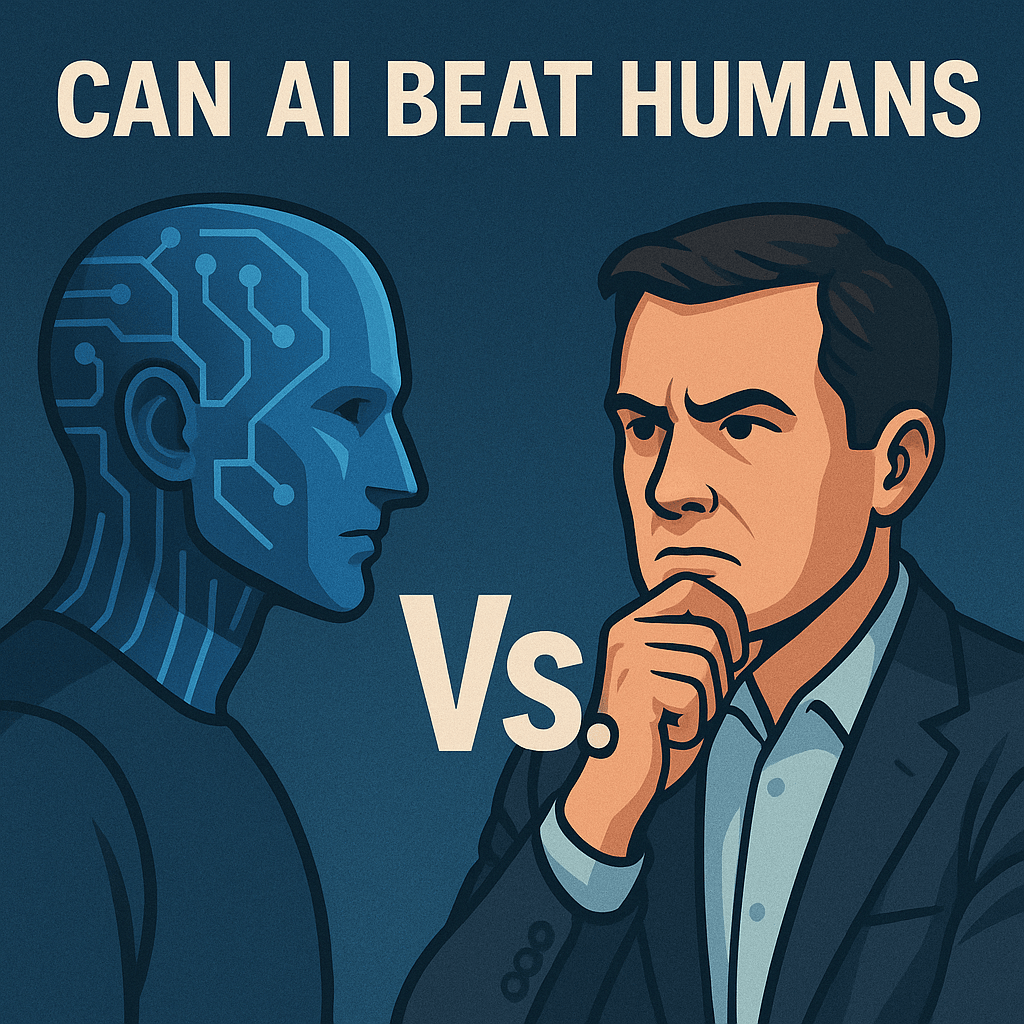
So, do algorithms trounce human investors? The answer is a qualified “yes, but.” AI’s strengths—speed, scale, and objectivity—give it a clear edge in specific domains. Quant funds consistently outperform actively managed mutual funds, with a 2024 Morningstar study showing that 70% of AI-driven funds beat their human-run peers over five years. High-frequency trading, powered by AI, dominates short-term market moves, with firms like Virtu Financial reporting profit margins above 50%.
But humans still have a role. AI struggles with “unknown unknowns”—events without historical precedent. Veteran investors like Warren Buffett rely on intuition and long-term thinking, areas where AI’s data-driven approach can falter. For instance, AI might crunch numbers on a company’s P/E ratio, but a human might better grasp its cultural impact or leadership quality. Hybrid approaches, where humans guide AI models, often yield the best results. Firms like Bridgewater combine human oversight with AI to balance creativity and precision.
Retail investors, armed with AI tools like TradeStation or Interactive Brokers’ AI-driven platforms, are also leveling up. These platforms offer predictive models and automated trading, narrowing the gap with pros. In 2025, over 40% of retail traders use some form of AI assistance, per a Fidelity survey.
The Risks and Road Ahead
AI isn’t a magic bullet. Overreliance on algorithms can lead to systemic risks, like flash crashes triggered by synchronized trading. In 2010, an algorithmic feedback loop caused a 9% market drop in minutes. Regulators are watching closely, with the SEC proposing tighter oversight of AI trading in 2024. Ethical concerns also loom—AI can amplify biases in data, like favoring certain stocks based on flawed historical trends.
Looking forward, AI’s role will only grow. Advances in quantum computing and generative AI (like models powering sentiment analysis) could make algorithms even smarter. By 2030, Goldman Sachs predicts AI-driven trading will account for 50% of global market volume. But as markets evolve, so do the challenges. Algorithms must adapt to new data sources—like real-time ESG metrics or decentralized finance (DeFi) trends—while avoiding overfitting or regulatory traps.
Conclusion
AI-driven stock market predictions have transformed trading, giving quant funds and algo strategies a measurable edge over human investors in speed, scale, and consistency. Yet, humans bring intuition and adaptability that AI can’t fully replicate. The future likely belongs to a hybrid model—AI crunching data, humans steering the ship. For now, algorithms are winning battles, but the war for market supremacy is far from over. Whether you’re a retail trader or a hedge fund titan, one thing’s clear: ignoring AI is no longer an option.


Leave a Reply