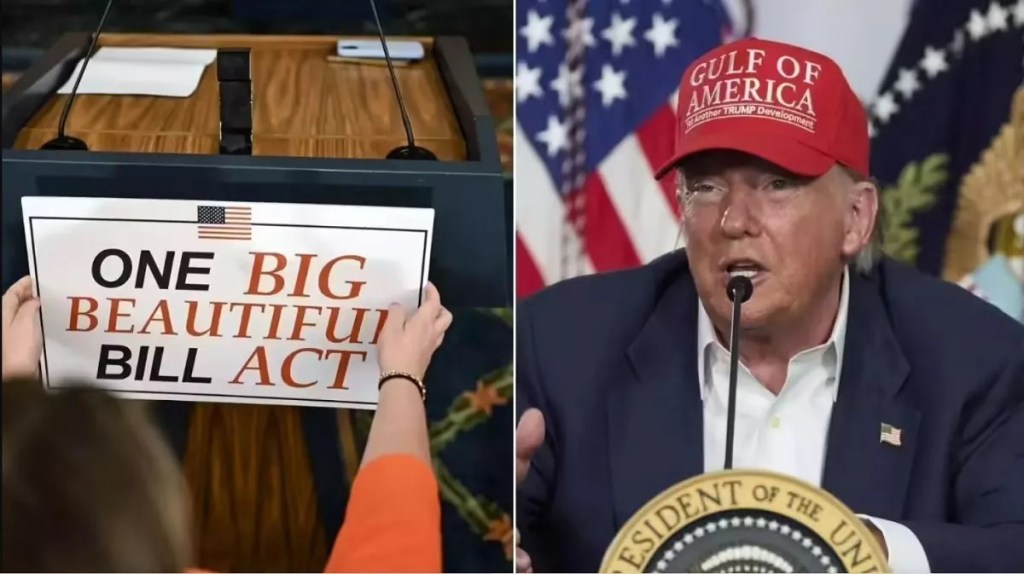
The One Big, Beautiful Bill Act (OBBBA) is a sweeping $4–4.5 trillion tax-and-spending reconciliation package championed by former President Trump. It merges permanent extensions of the 2017 tax cuts, expanded personal reliefs (e.g., no taxes on tips/overtime, higher SALT cap), and generous business allowances—offset by deep cuts to Medicaid, SNAP, and climate initiatives. The bill narrowly cleared Congress in early July and awaits presidential signature.
Updated Status of the Remittance Tax
Prior proposals had included a 5% levy on international remittances by non-citizens (e.g., H‑1B, green card holders)—later slashed to 3.5% in the House. In the final Senate-approved text (July 1), it was cut further to just 1%, applicable only to physical remittances (cash, money orders, cashier’s checks) sent after December 31, 2025—electronic, card-based, and bank-funded transfers are exempt.
Key updated points:
- Rate: 1% tax on remittances funded by cash-like instruments
- Effective date: Transfers made on or after January 1, 2026
- Exemptions: Remittances via banks or U.S.-issued credit/debit cards remain untaxed
What It Means for India
1. Minimal Cost, Mostly Formal Channels
- The 1% rate is significantly lower; formal remittances through banks or cards remain unaffected.
- Informal cash remittances, however, will carry a modest tax on transfers exceeding $15 .
2. Boost to Remittance Flows via Formal Channels
- Since most NRIs already use banks or remittance services with U.S. financial ties, the impact is limited.
- This policy incentivizes shifting from informal to formal channels, improving transparency and tracking.
3. Negligible Macro-Impact
- Earlier estimates pegged the 5% draft at a $1.6 bn annual hit to India; the 1% tax adds only a minor burden on physical transfers.
- Given India’s USD 100bn+ remittance intake (with ~28% from the U.S.), the financial effect will be small.
4. Administrative Clean-Up
- The exclusions for bank and card transfers ease operational burden for remittance firms, while cash transfer restrictions may shift more flows into traceable channels.
Broader Implications
- Diaspora Behavior: NRIs will likely favor bank/card transfers, minimizing costs.
- Foreign Reserves & FX: Formal remittances, now with fewer tax leaks, may help stabilize India’s forex flows.
- Policy Lesson: India can advocate for diaspora-friendly terms by engaging the U.S. in future negotiations.
Final Takeaways
| Feature | Original Proposal | Final Outcome (Jan 1, 2026) |
|---|---|---|
| Remittance Tax Rate | 5% → 3.5% | 1% only on physical transfers |
| Affected Channels | All transfers | Only cash/money orders/cashier’s |
| Formal Transfers (e.g., banks/card) | Taxed | Exempt |
| Impact on India | High (~$1.6bn) | Minimal; formal remittances unaffected |
In short, the final version of the One Big, Beautiful Bill imposes a minor 1% tax on a shrinking portion of remittances—principally cash. The vast majority of money remitted via banks/cards, typically used by the Indian diaspora, stays tax-free. India and its diaspora need minimal adjustment, opting to preserve formal channels and remain vigilant on policy enforcement.
What to Watch Next:
- Presidential signature expected imminently.
- IRS rulemaking could clarify further operational details for remittance providers.
- Possible diplomatic or legislative adjustments if the tax proves problematic for diaspora communities.
(Sources: http://www.washingtonpost.com, http://www.en.wikipedia.org, http://www.businessinsider.com, http://www.ft.com, http://www.ndtv.com, http://www.eisneramper.com, http://www.cgdev.org, http://www.indiatoday.in)


Leave a Reply