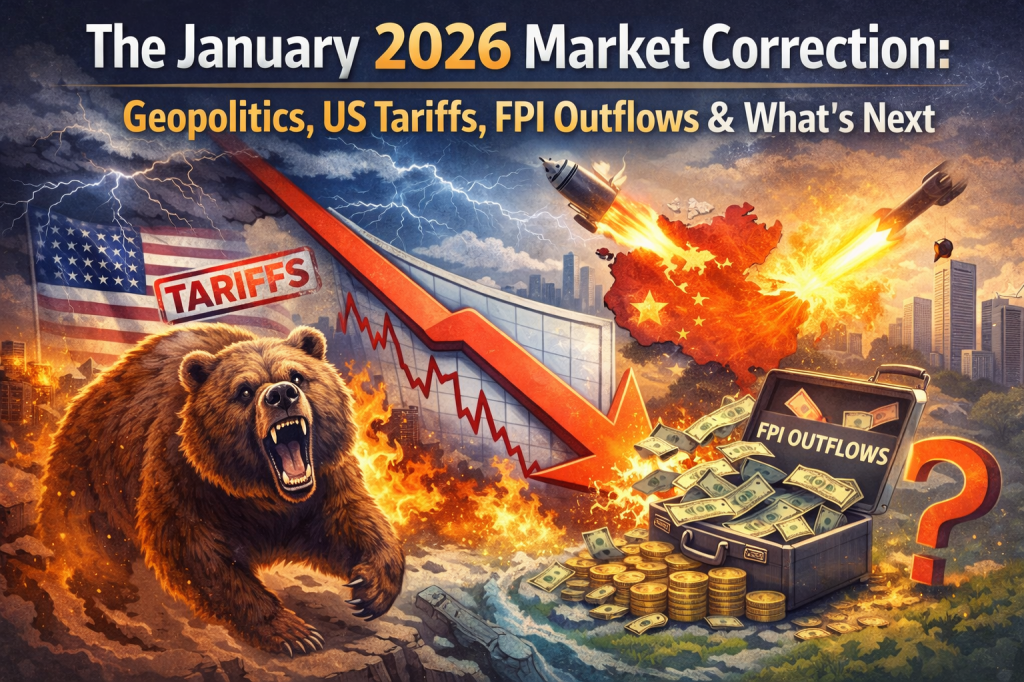
Hey everyone, welcome back to my blog. The Indian stock market has been under pressure in January 2026, with the Nifty and Sensex down significantly since the year began. This correction stems from a combination of global tensions and domestic factors. Let’s break down the main drivers—geopolitics, US tariffs, and heavy FPI outflows—and look at what might come next.
The Big Picture: A Shaky Start to 2026
The year opened with early optimism quickly fading into a classic correction. Broader markets have been hit harder, and global cues have added to the volatility. For India specifically, the pain has been amplified by international risks and investor exits.
Geopolitics: The Ever-Present Storm Cloud
Geopolitical uncertainties have rattled markets. Escalating US tensions, including aggressive stances on trade and alliances, have spiked global volatility. For India, ongoing Russia-Ukraine issues, neutral oil purchases from Russia, and broader uncertainties have hurt sentiment. These factors have triggered risk-off behavior in emerging markets, hitting sectors like IT, realty, and capital goods particularly hard. In today’s connected world, external events can quickly impact local indices.
US Tariffs: The Direct Hit to Sentiment
US tariffs have been a major concern. Aggressive moves and threats from the US—linked to trade talks, agriculture access, and oil dealings—have unsettled the export sector. Delays in a US-India trade deal, combined with punitive rhetoric, have weighed on sentiment. This has coincided with mixed Q3 earnings and cautious corporate guidance. The rupee’s depreciation has further reduced returns for foreign investors.
FPI Outflows: The Cash Exodus
Foreign Portfolio Investors have been selling heavily, with outflows in the tens of thousands of crores this month alone, adding to last year’s record exits. Higher US yields, a stronger dollar, geopolitical fears, and tariff uncertainty have driven capital toward safer assets like US Treasuries and gold. Domestic institutions have absorbed much of the selling, but it hasn’t fully offset the pressure. High valuations in some areas and currency weakness have made India less attractive short-term.
What’s Next: Light at the End of the Tunnel?
The correction could persist into February, but fundamentals suggest eventual stabilization. The Union Budget on February 1, 2026, is a key event—expected to focus on fiscal discipline, capex, and reforms. Positive surprises could spark recovery.
Earnings growth projections for the coming years remain solid and could support valuations if delivered. Potential tariff relief, trade deal progress, and RBI liquidity measures provide support. FPIs may return later in 2026 as valuations moderate and growth improves. Sectors like banking, autos, and healthcare could lead any rebound.
In short, expect near-term volatility, but stay diversified, focus on quality, and consider long-term approaches like SIPs.
Thanks for reading—share your thoughts below, especially on the upcoming budget!
Disclaimer
This post is for informational and educational purposes only and reflects my personal views based on publicly available information. It is not intended as financial advice, investment recommendations, or a solicitation to buy or sell any securities. Market conditions can change rapidly, and investing involves risks, including the potential loss of principal. Always consult a qualified financial advisor before making any investment decisions. I am not a certified financial expert, and past performance is not indicative of future results.


Leave a Reply