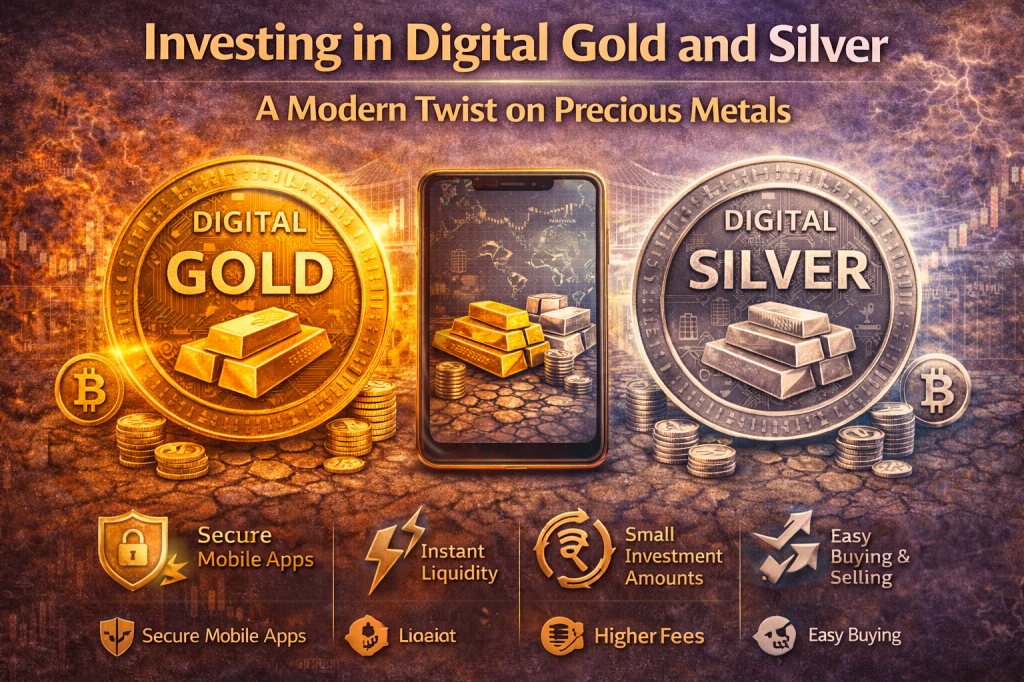
Hey folks, in the world of investments, gold and silver have always been the go-to for hedging against inflation and economic uncertainty. But lugging around physical bars or coins? Not everyone’s cup of tea. Enter digital gold and silver – a hassle-free way to own these precious metals without the storage drama. With apps like PhonePe, Google Pay, Paytm, Groww, and specialized platforms like MMTC-PAMP or SafeGold, you can buy, sell, and even convert to physical form starting from as little as ₹1. In this post, we’ll break down what digital gold and silver are, how they work, their pros and cons, and crucially, the tax implications post-Union Budget 2026. Let’s dive in!
What is Digital Gold and Silver?
Digital gold and silver are essentially virtual representations of physical precious metals. When you buy them through a platform:
- Your investment is backed by actual 24K gold or 99.9% pure silver stored in secure, insured vaults (often by trusted custodians like Brink’s or Sequel Logistics).
- You get real-time pricing based on live market rates, minus a small spread or fee (usually 0.5-1%).
- Features include SIP-like accumulation, gifting options, and sometimes even delivery of physical metal if you accumulate enough (e.g., 1g+ for gold).
Popular platforms in India:
- Fintech apps: PhonePe Gold, Google Pay Gold, Paytm Gold/Silver.
- Dedicated providers: Augmont, MMTC-PAMP, OroPocket.
- Investment apps: Groww, Zerodha Coin (via partnerships).
Silver works similarly but is often cheaper per unit and more volatile due to its industrial uses (think electronics, solar panels).
How Does It Work?
- Buying: Link your bank account or UPI, select the amount (or grams), and pay. Boom – you own digital metal instantly.
- Selling: Sell back at current rates; funds hit your account in seconds.
- Conversion: Many platforms let you convert to coins/bars/jewelry for a fee, delivered to your doorstep.
- Storage: Zero cost to you – platforms handle it.
It’s regulated by SEBI and RBI guidelines, ensuring transparency. Pro tip: Always check for purity certifications (e.g., LBMA-accredited gold).
Pros of Digital Gold and Silver
- Accessibility: Start small – no need for lakhs like physical buys.
- Liquidity: Buy/sell 24/7, unlike jewelers or banks.
- No Storage/Theft Risk: Vaults are insured; you don’t worry about safes or lockers.
- Transparency: Live pricing, no hidden making charges (though GST applies).
- Diversification: Easy to add to your portfolio alongside stocks or mutual funds.
- For silver specifically: Higher potential upside due to industrial demand, especially with the EV and green energy boom.
Cons to Watch Out For
- Platform Risk: If the app shuts down or faces issues (rare, but possible), you might face delays in accessing your metal.
- Fees and Spreads: Buy-sell spreads can eat into short-term gains (e.g., 1-3% round trip).
- No Physical Feel: If you love holding gold, this might feel too virtual.
- Volatility: Prices fluctuate with global markets – not ideal for risk-averse folks.
- GST Hit: 3% on purchase, which isn’t refundable like on jewelry making charges.
- Silver’s industrial tie-in makes it more unpredictable than gold.
Compared to physical forms, digital is great for millennials and urban investors, but physical might suit those wanting tangible assets for inheritance or gifting.
Taxation on Digital Gold and Silver: Post-Union Budget 2026 Implications
Digital gold and silver are taxed similarly to physical precious metals, as they represent ownership of the underlying asset. The Union Budget 2026, presented by Finance Minister Nirmala Sitharaman, brought some tweaks to the precious metals space – notably customs duty reductions on gold and silver imports (from 6% to 5%), which could lower domestic prices and boost affordability. However, for digital investments, the core tax rules remain largely unchanged from previous years. Here’s the breakdown:
Key Tax Components:
- GST: 3% on purchase (added to the cost price). No GST on selling, but it’s effectively a sunk cost since it’s not refundable. Unlike physical jewelry, there’s no separate 5% making charge GST, making digital slightly cheaper upfront.
- No Interest Income: Unlike Sovereign Gold Bonds (SGBs), digital gold/silver doesn’t pay any periodic interest, so no income tax on that front.
- Capital Gains Tax:
- Short-Term Capital Gains (STCG): If held for less than 24 months, gains are added to your income and taxed at your slab rate (e.g., 30% for high earners). This holding period was standardized to 24 months for unlisted assets like gold in recent budgets, and Budget 2026 didn’t alter it.
- Long-Term Capital Gains (LTCG): If held for 24 months or more, gains are taxed at a flat 12.5% without indexation benefits (removed in Budget 2024 and carried forward). This is a key change from pre-2024 rules, where indexation could reduce your tax liability by adjusting for inflation.
- Budget 2026 Specifics: While SGBs saw a big shift – capital gains exemption now limited to original primary market buyers holding till 8-year maturity (effective April 1, 2026) – digital gold/silver taxation stays the same. The duty cut might indirectly benefit by reducing entry prices, potentially leading to higher gains if sold later. However, no new exemptions or deductions were introduced for digital forms.
Tax Calculation Example:
Suppose you buy ₹10,000 worth of digital gold (including 3% GST). After 18 months, you sell for ₹12,000.
- Gain: ₹2,000 (STCG).
- Tax: Added to income; if you’re in 30% slab, pay ₹600 tax.
If held 25 months: LTCG at 12.5% = ₹250 tax.
For NRIs: Same rules apply, but with TDS on sales (consult a tax advisor for repatriation).
Pro Tip: Track your buys/sells via platform statements for ITR filing – gains are reported under ‘Capital Gains’ in Schedule CG.
Should You Invest in Digital Gold/Silver in 2026?
If you’re looking for a low-entry barrier hedge, yes – especially with gold prices potentially stabilizing post-duty cut. Allocate 5-10% of your portfolio here for diversification. Silver could shine brighter with global demand surges. But remember, precious metals aren’t wealth creators like equities; they’re preservers.
Compare briefly: Vs. Gold ETFs – digital has GST but no expense ratio; Vs. SGBs – no interest but easier liquidity; Vs. Physical – no storage woes.
Disclaimer
This post is for informational purposes only and does not constitute financial, tax, or investment advice. Tax rules can change, and individual circumstances vary. Always consult a certified financial advisor or tax professional before making investment decisions. Market investments are subject to risks, and past performance is no guarantee of future results. The author and blog are not liable for any losses incurred based on this content.


Leave a Reply