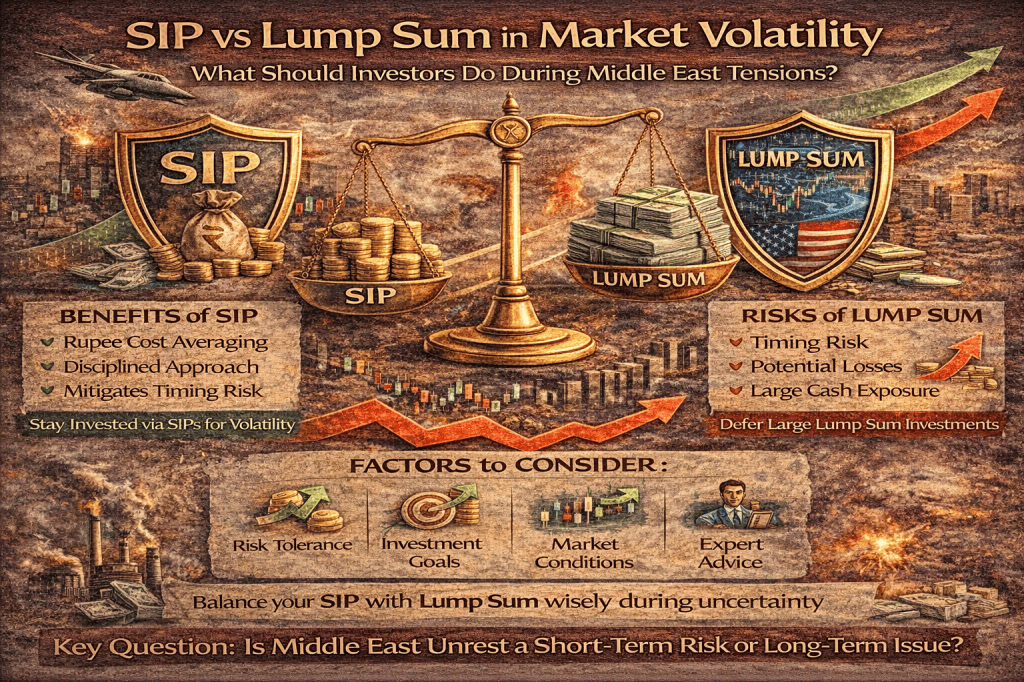
If there’s one thing markets hate, it’s uncertainty.
With ongoing geopolitical tensions in the Middle East, rising oil price risks, global trade frictions, and central bank policy shifts, investors are once again asking:
👉 Should I invest via SIP or go with a lump sum during volatile times?
For Indian investors watching the impact on the NSE and BSE, this question becomes even more relevant.
Let’s break it down in a practical, no-noise way.
🌍 Why Geopolitical Tensions Increase Market Volatility
Conflicts in the Middle East impact markets through:
- Oil price spikes (India is a major oil importer)
- Currency fluctuations (pressure on INR)
- FII selling in emerging markets
- Safe-haven demand for gold & US bonds
When uncertainty rises, equity markets often react with sharp swings — both up and down.
That’s where the SIP vs Lump Sum debate becomes critical.
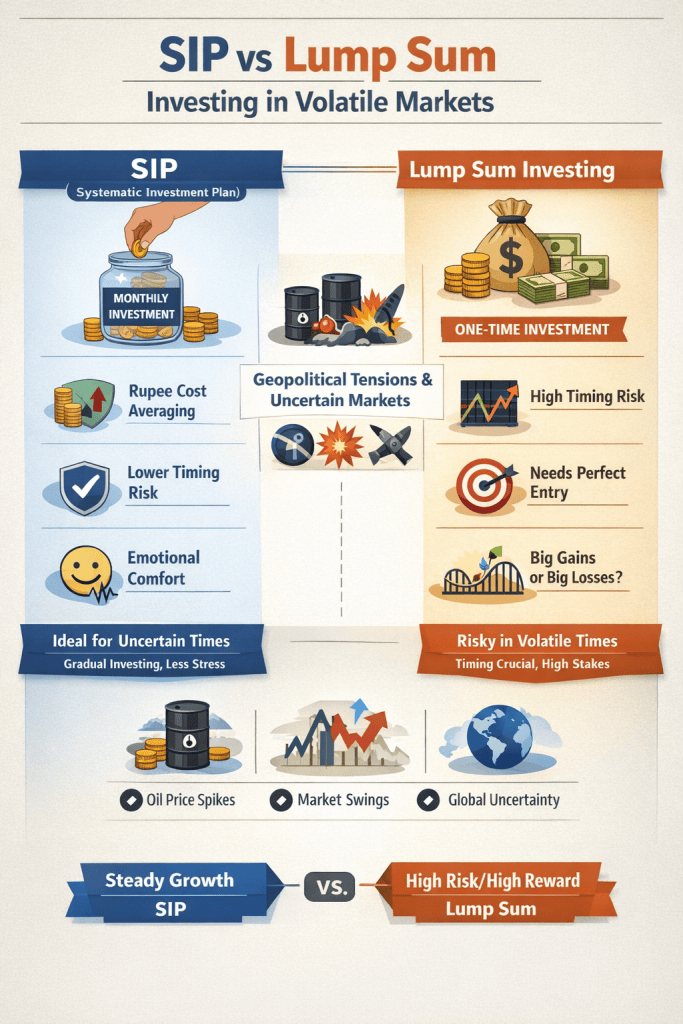
💰 What is SIP?
Systematic Investment Plan (SIP) means investing a fixed amount at regular intervals (monthly/weekly) in mutual funds.
Why SIP Works in Volatility:
✔ Rupee Cost Averaging – You buy more units when markets fall
✔ Reduces timing risk
✔ Emotionally easier during sharp corrections
✔ Ideal for salaried investors
In uncertain times, SIP benefits from volatility instead of fearing it.
💵 What is Lump Sum Investing?
Lump sum means investing a large amount at one time.
When Lump Sum Works:
✔ Markets are deeply corrected
✔ Valuations are attractive
✔ Long-term horizon (5–10+ years)
✔ You have surplus idle cash
But during geopolitical uncertainty, timing becomes extremely important.
📉 SIP vs Lump Sum During Middle East Crisis-Type Volatility
Let’s compare practically:
| Factor | SIP | Lump Sum |
|---|---|---|
| Timing Risk | Low | High |
| Emotional Stress | Low | High |
| Benefit from Corrections | Yes | Only if invested at bottom |
| Suitable for Uncertain Markets | ✅ Yes | ⚠ Depends on timing |
When markets are swinging daily due to oil price headlines or war updates, SIP provides psychological and financial stability.
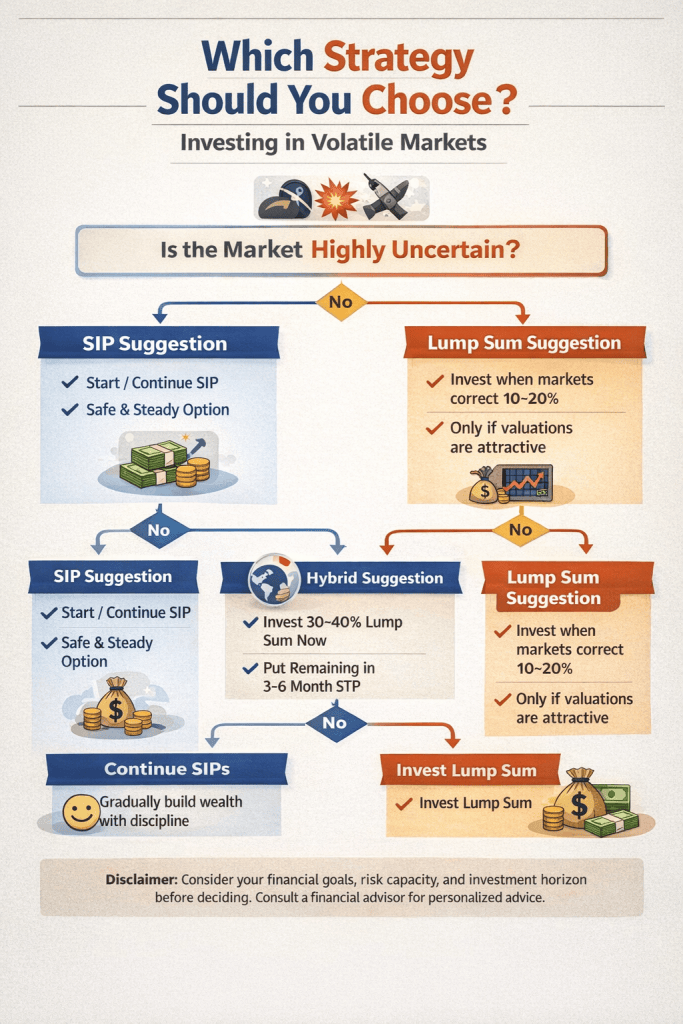
📊 What History Shows
During major uncertain events like:
- COVID crash (2020)
- Russia-Ukraine war (2022)
- Oil shocks & inflation cycles
Investors who continued SIPs in broad indices like the Nifty 50 saw strong long-term recovery benefits.
On the other hand, lump sum investors who entered just before sharp corrections had to wait longer to recover.
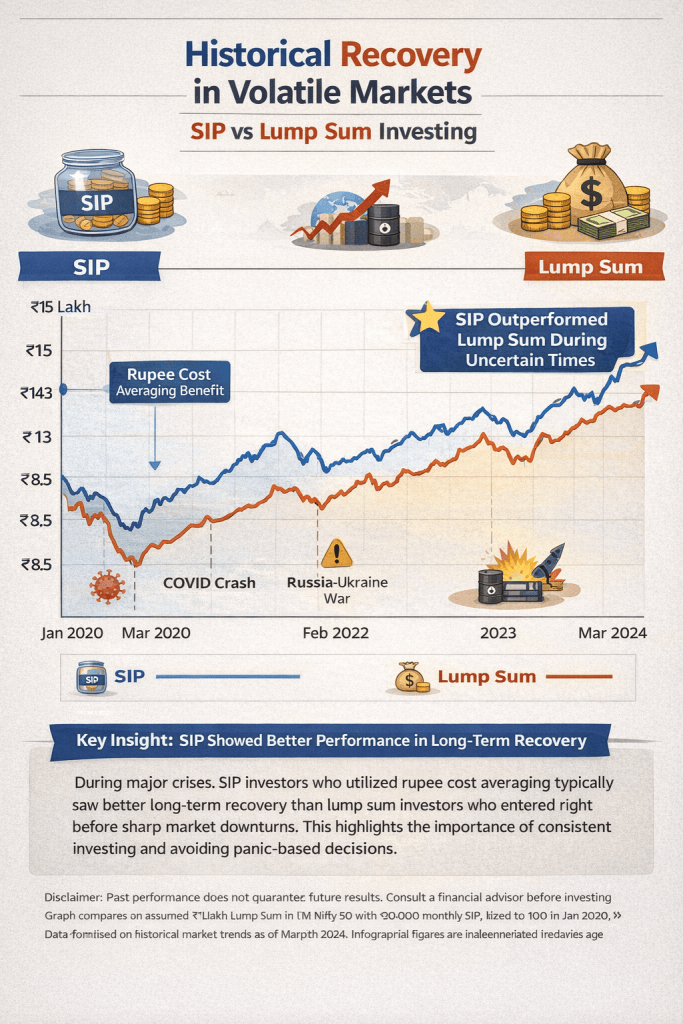
🧠 Smart Strategy in Current Uncertainty
Instead of choosing one blindly, consider this balanced approach:
🔹 If You Have Fresh Salary Income:
Continue or increase SIP gradually.
🔹 If You Have Large Idle Cash:
- Deploy 30–40% as lump sum
- Stagger remaining via 3–6 month STP (Systematic Transfer Plan)
🔹 If Markets Correct 10–20%:
Gradually increase allocation.
🪙 What About Gold & Alternatives?
During geopolitical stress:
- Gold tends to benefit
- Debt funds offer stability
- Equity remains volatile short term but powerful long term
A diversified approach is wiser than all-in lump sum equity investing.
🏆 Final Verdict: SIP vs Lump Sum in Volatility
In the current Middle East–driven uncertainty:
✅ SIP is safer and psychologically easier
⚖ Lump sum works only if valuations are attractive
🧘 Discipline beats prediction
Remember: Volatility is temporary. Wealth creation is long term.
The real risk is not volatility — it is panic.
📌 Disclaimer
This article is for educational and informational purposes only and should not be considered financial or investment advice. Market investments are subject to risks. Geopolitical events, including tensions in the Middle East, can significantly impact global and Indian markets. Investors should consult a qualified financial advisor before making investment decisions. Past performance of indices such as the Nifty 50 does not guarantee future returns.


Leave a Reply