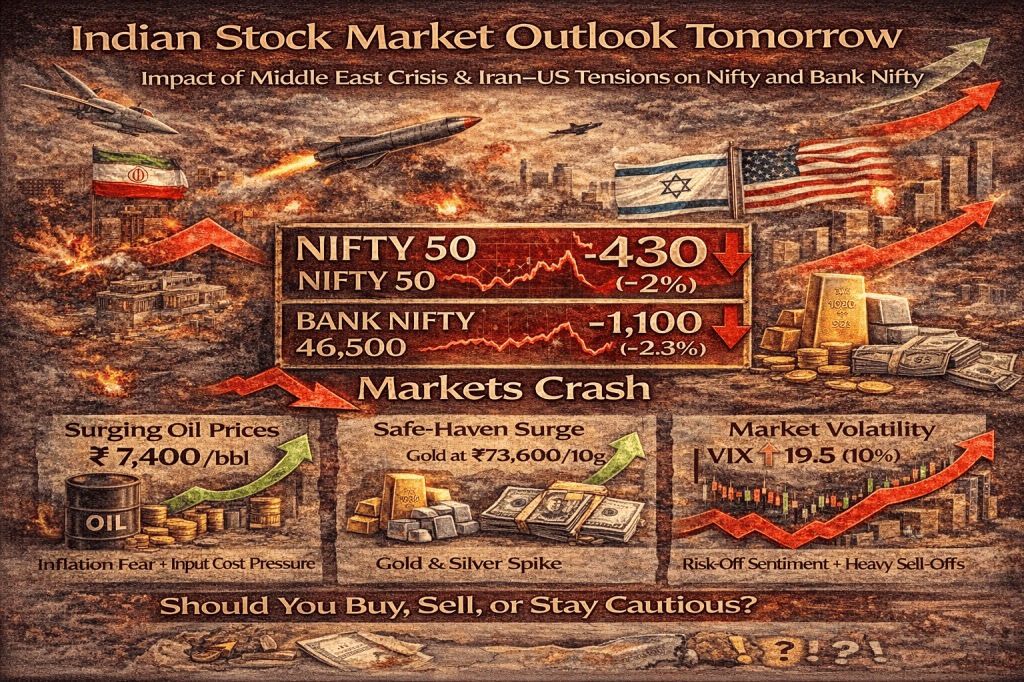
This image is for illustrative purposes only. Market reaction may differ from it.
The Middle East crisis has intensified after reports of Iran attacking US military bases and strategic data infrastructure. Whenever geopolitical tensions escalate to this level, global financial markets react swiftly — and India is no exception.
So what should Indian investors expect from the stock market tomorrow?
Let’s break it down calmly and logically.

1️⃣ Global Cues Will Set the Tone
Indian markets typically react to:
- US market closing performance
- SGX/ Gift Nifty trends
- Crude oil price movement
- US Dollar Index (DXY)
- Asian market sentiment
If US markets closed sharply lower and crude oil spiked, expect a gap-down opening in Nifty and Sensex.
If the attack impact appears contained and markets stabilize globally, panic selling may be limited.
2️⃣ Crude Oil Is the Biggest Risk for India
India imports over 80% of its crude oil. Any Middle East escalation directly impacts:
- Oil prices
- Rupee
- Inflation expectations
- Fiscal deficit
If Brent crude moves above key psychological levels (for example $95–100+), markets may react negatively, especially:
- Paint companies
- Aviation stocks
- OMCs
- Logistics
- Auto sector
Higher crude = margin pressure for many sectors.
3️⃣ Likely Sectoral Impact Tomorrow
🔴 Sectors That May Face Pressure:
- Banking & Financials (risk-off sentiment)
- Auto
- Aviation
- Consumer discretionary
- Midcaps & smallcaps (high beta segments fall more in panic)
🟢 Defensive & Safe Haven Plays:
- IT (if USD strengthens)
- Pharma
- FMCG
- Gold-related stocks
- Defence stocks (on higher global military spending narrative)
4️⃣ What About FIIs & DIIs?
In geopolitical crises:
- FIIs usually reduce risk exposure
- DIIs often provide support
If FIIs were already cautious before this event, volatility could increase further.
Watch tomorrow’s FII/DII data carefully.
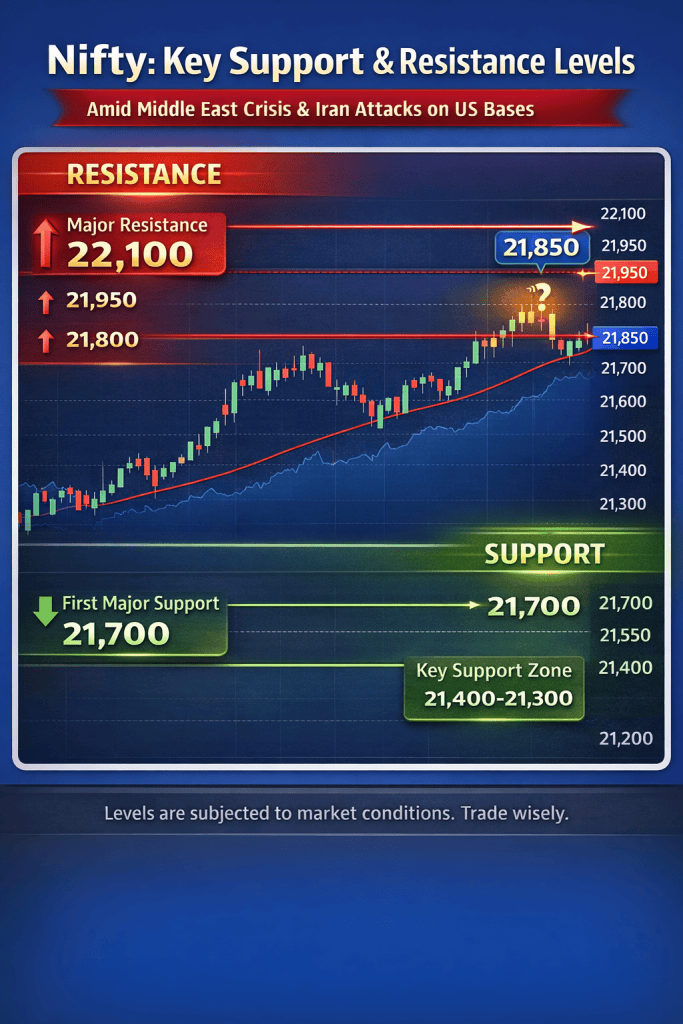
5️⃣ Nifty & Bank Nifty Technical Outlook
If markets open weak:
- Immediate support zones become crucial
- A break below key swing support could trigger short-term panic
However…
Unless the conflict escalates into a prolonged war affecting oil supply chains significantly, markets often recover faster than expected.
History shows:
- Geopolitical shocks cause sharp but short-lived corrections
- Structural bull markets resume once uncertainty reduces
6️⃣ Gold, Silver & Dollar Reaction
Expect:
- Gold to rally (safe haven buying)
- Silver to remain volatile
- Dollar to strengthen
- Emerging market currencies (including INR) to weaken
This indirectly pressures Indian equities.
7️⃣ Should Investors Panic?
Short answer: No.
Unless:
- Oil supply is structurally disrupted
- Major economies directly enter full-scale war
- Global financial infrastructure is severely impacted
Markets price in fear quickly — but they also recover quickly once clarity emerges.
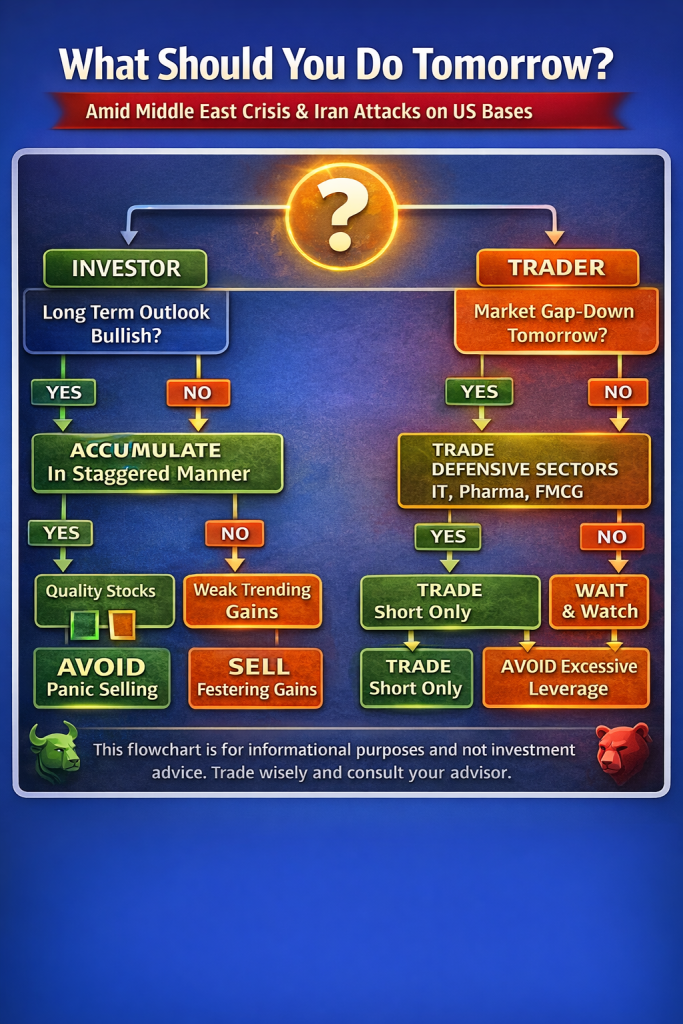
Long-term investors should:
- Avoid emotional selling
- Stick to asset allocation
- Consider staggered buying in quality stocks if panic deepens
8️⃣ What Traders Should Do Tomorrow
- Expect volatility
- Avoid aggressive leverage
- Trade with strict stop losses
- Watch crude oil movement in real time
- Monitor Gift Nifty before opening
First 30–45 minutes will likely be highly volatile.
📌 Final View for Tomorrow
Base Case:
- Volatile session
- Possible gap-down opening
- Defensive sectors outperform
- High beta stocks under pressure
Worst Case:
- Sharp selloff if oil spikes uncontrollably
Best Case:
- Market shrugs off news if escalation appears limited
Bigger Picture
Indian markets are driven by:
- Domestic liquidity
- Corporate earnings
- Structural growth story
Geopolitical shocks create volatility — not permanent damage — unless they turn systemic.
For long-term investors, corrections often become opportunities.
Disclaimer
This article is for educational and informational purposes only and should not be considered as investment advice. Stock market investments are subject to market risks. Geopolitical situations are dynamic and can change rapidly. Please consult your financial advisor before making any investment decisions.


Leave a Reply