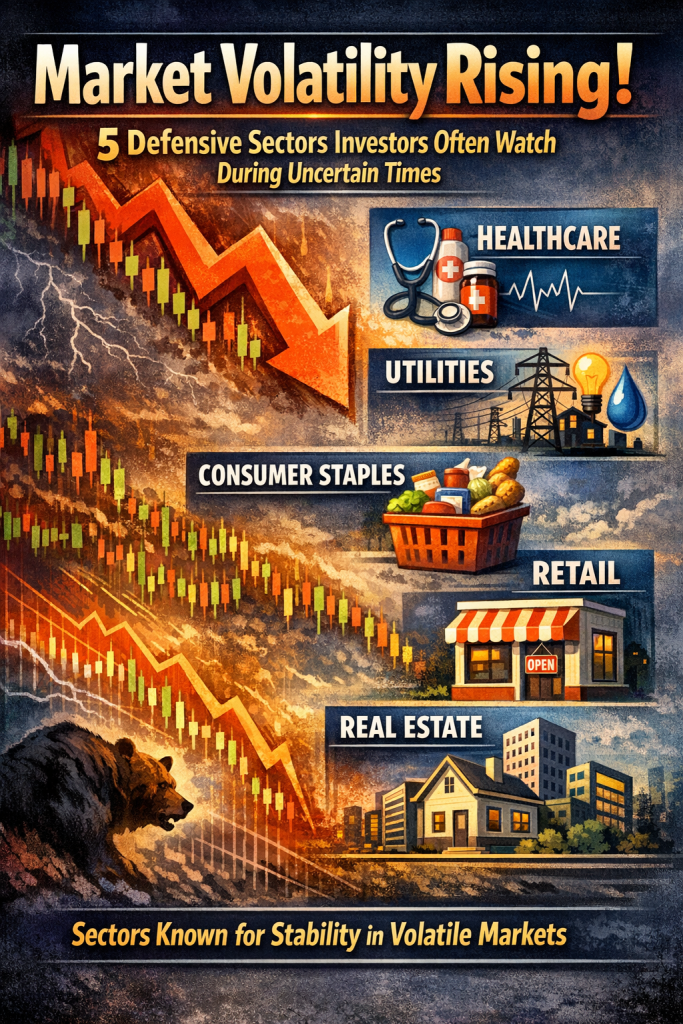
Stock market volatility is a natural part of investing. When markets become uncertain due to global events, economic slowdowns, or geopolitical tensions, investors often shift their focus toward sectors that historically show relatively stable demand.
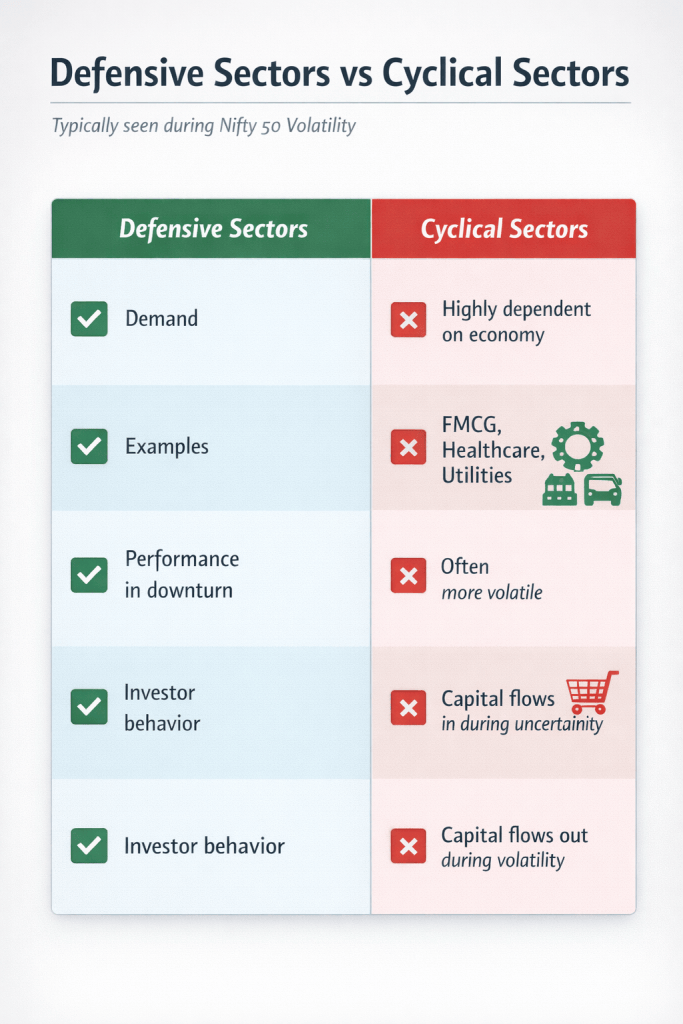
In India, this sector rotation can often be observed during periods when major indices like the BSE Sensex or the Nifty 50 experience increased volatility.
Instead of chasing high-growth sectors, investors tend to move capital into defensive sectors—industries that provide essential products and services and tend to remain resilient even during economic uncertainty.
Let’s look at five such sectors investors frequently monitor when volatility rises.
1. FMCG (Fast Moving Consumer Goods)
The FMCG sector is widely considered one of the most defensive sectors in the market.
These companies produce everyday necessities such as:
- Packaged foods
- Personal care products
- Household essentials
- Beverages
Demand for these products usually remains steady regardless of economic conditions. Even during downturns, consumers continue buying toothpaste, soaps, cooking oil, and packaged food.
Because of this consistent demand, FMCG companies often experience relatively stable revenues and cash flows compared to cyclical sectors.
Why investors watch FMCG during volatility:
- Stable consumer demand
- Strong brand loyalty
- Regular cash flows
- Defensive nature during economic slowdowns
2. Healthcare and Pharmaceuticals
Healthcare is another sector that tends to remain resilient during market turbulence.
People require medicines, diagnostic services, and hospital care regardless of market conditions. This non-discretionary demand makes healthcare a sector investors often track during uncertain times.
The healthcare ecosystem includes:
- Pharmaceutical manufacturers
- Hospitals and healthcare providers
- Diagnostic companies
- Medical equipment producers
In India, the pharmaceutical industry also benefits from exports and global demand, which can sometimes cushion domestic economic cycles.
Key reasons investors monitor healthcare:
- Essential nature of healthcare services
- Global export opportunities
- Long-term growth from aging populations and rising healthcare awareness
3. Utilities
Utilities are another classic defensive sector.
This sector typically includes companies involved in:
- Electricity generation and distribution
- Water supply
- Gas utilities
- Energy transmission infrastructure
These services are fundamental to everyday life, meaning demand remains relatively stable even during economic downturns.
Utilities often operate under regulated frameworks and may have predictable revenue streams, which can make them attractive when markets become uncertain.
Why utilities attract attention during volatility:
- Essential services with steady demand
- Relatively predictable cash flows
- Often stable dividend-paying businesses
4. IT Services
At first glance, the IT services sector may not seem defensive compared to FMCG or utilities. However, in the Indian market, it sometimes behaves as a relative safe haven during certain periods of volatility.
Several factors contribute to this:
- A large portion of revenue comes from global clients
- Earnings are often denominated in foreign currencies
- Weak domestic currency can support export revenues
Because of their international exposure, Indian IT services companies may sometimes show resilience when domestic economic conditions weaken.
Why investors monitor IT services:
- Global revenue diversification
- Currency benefits from a weaker rupee
- Long-term demand for digital transformation
5. Consumer Staples Retail and Essentials Supply Chains
Another area investors often observe during volatility is essential retail and supply chains linked to everyday consumption.
Businesses tied to food distribution, grocery chains, and essential product logistics often maintain stable demand even during uncertain economic environments.
This category overlaps with FMCG but also includes companies involved in distribution, retail networks, and essential supply infrastructure.
Reasons investors watch this space:
- Continuous consumption demand
- Essential product supply chains
- Stability during economic stress
Sector Rotation During Market Volatility
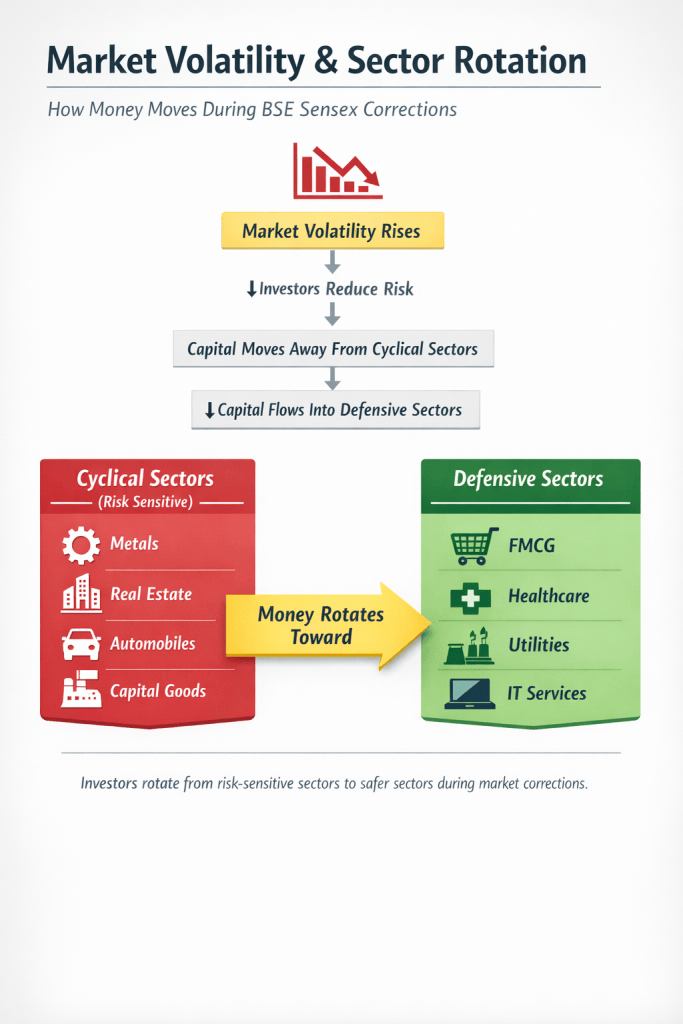
One of the interesting patterns seen in markets is sector rotation.
When volatility increases in indices such as the BSE Sensex, investors often shift capital away from high-growth cyclical sectors like:
- Real estate
- metals
- automobiles
- small-cap speculative stocks
Instead, funds may flow toward defensive sectors such as:
- FMCG
- healthcare
- utilities
- IT services
This rotation does not always happen perfectly, but historically it has been observed during many periods of market stress.
For long-term investors, understanding these cycles can help provide context during market corrections, rather than reacting emotionally to short-term fluctuations.
Final Thoughts
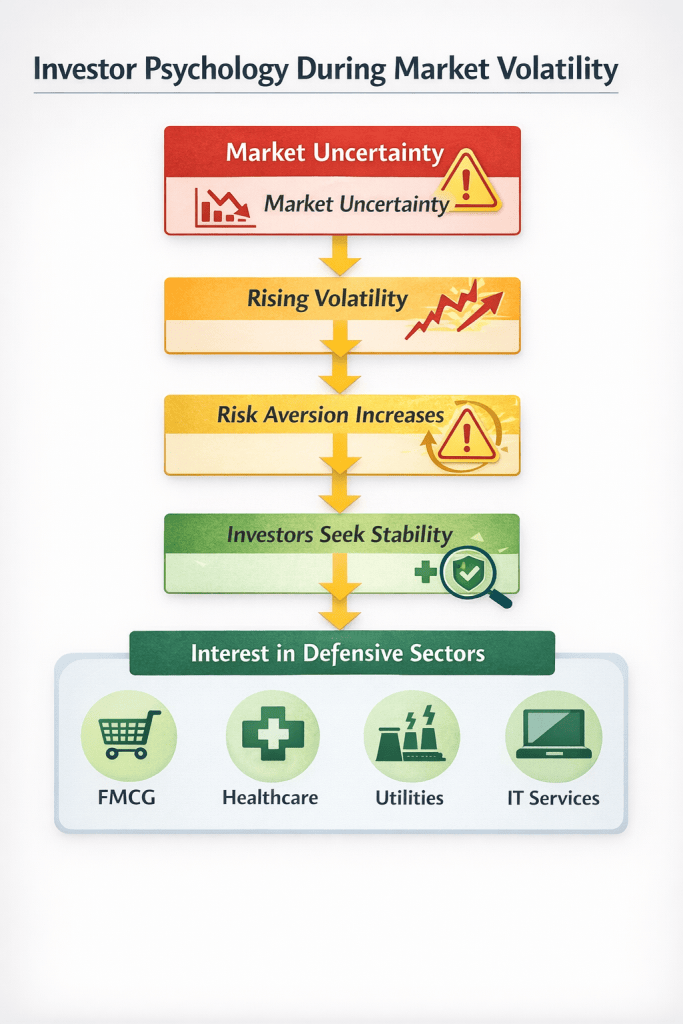
Market volatility is an inevitable part of investing. While no sector is completely immune to market movements, some industries tend to demonstrate greater resilience due to the essential nature of their products and services.
Sectors like FMCG, healthcare, utilities, and IT services are often closely watched by investors when uncertainty rises in the broader market.
Understanding how sector rotation works can help investors interpret market behavior more clearly and maintain a long-term perspective during periods of turbulence.
Disclaimer
This article is for informational and educational purposes only and should not be considered financial or investment advice. The sectors discussed are mentioned to illustrate general market behavior during volatility and do not constitute recommendations to buy or sell any stocks or securities. Investors should conduct their own research or consult a qualified financial advisor before making investment decisions.


Leave a Reply