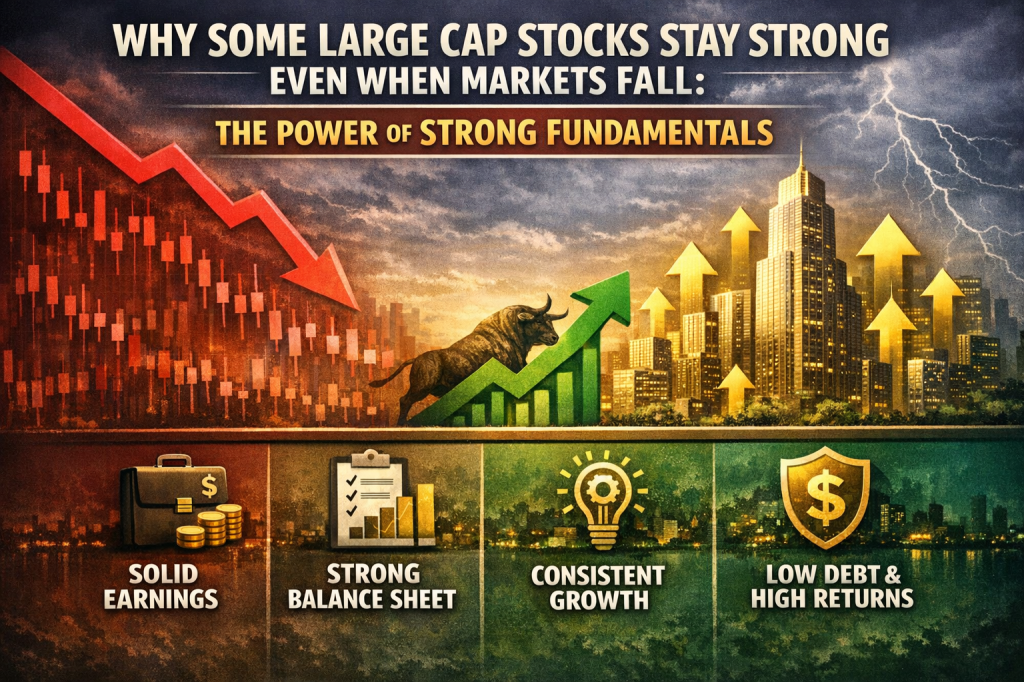
Stock market declines often create fear among investors. During sharp corrections, many stocks fall quickly due to panic selling, global uncertainty, or economic concerns. However, not all companies decline equally. Some large cap stocks remain relatively stable and resilient even when markets are under pressure.
Many of these companies are part of benchmark indices like the Nifty 50, which consists of some of the strongest and most established businesses in India.
Understanding why certain large cap companies remain resilient during market downturns can help investors better interpret market behaviour and identify quality businesses.
Let us explore the key reasons behind this resilience.
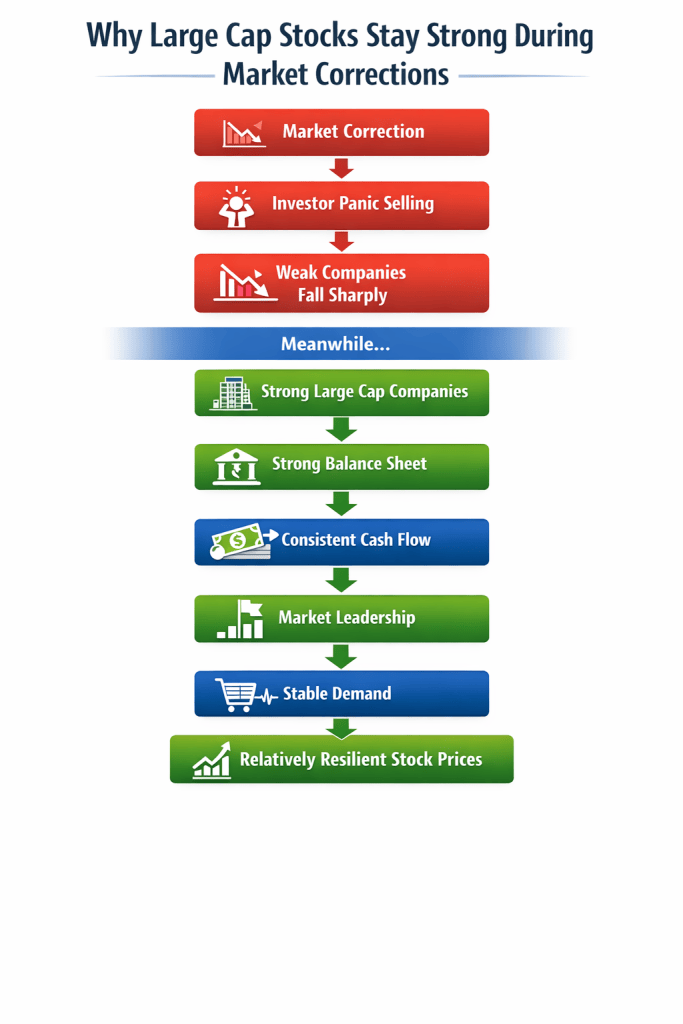
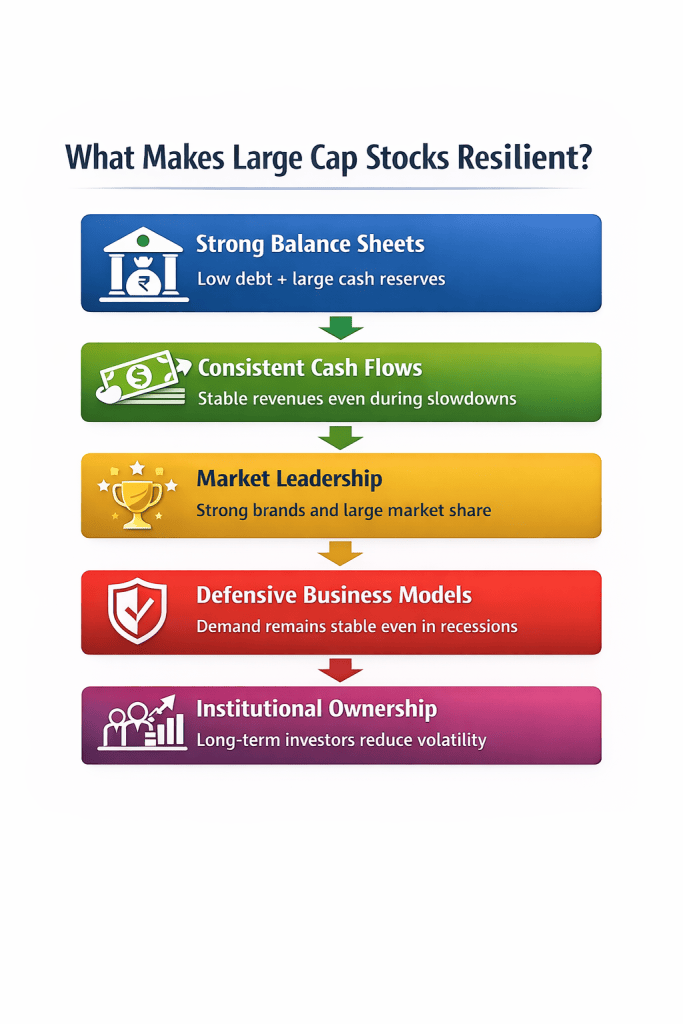
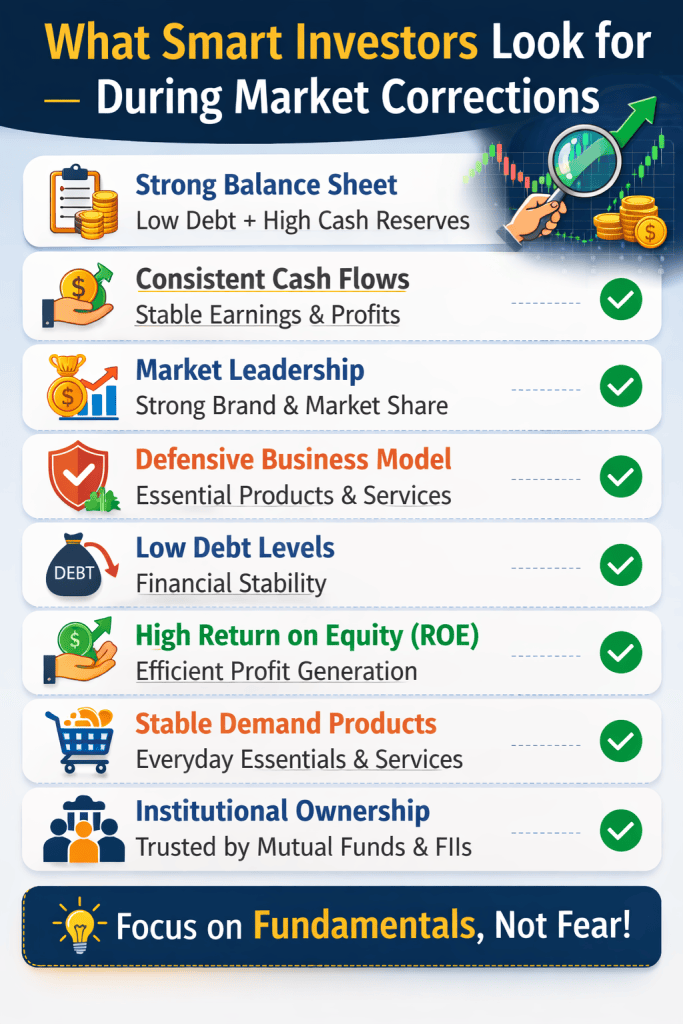
1. Strong Balance Sheets
One of the biggest strengths of resilient large cap companies is their strong financial position.
A strong balance sheet typically means:
- Low or manageable debt
- Large cash reserves
- High creditworthiness
- Ability to withstand economic shocks
Companies with weak finances often struggle during downturns because declining revenues make it harder to service debt. In contrast, financially strong companies can continue operating smoothly even in difficult environments.
This financial stability builds investor confidence and prevents excessive panic selling.
2. Consistent Cash Flows
Another key factor is stable and predictable cash flows.
Large cap companies often operate in sectors where demand remains relatively stable. Examples include:
- Consumer goods
- Banking and financial services
- IT services
- Energy and utilities
Because these companies generate consistent operating cash flows, they can continue funding operations, paying dividends, and investing in growth even during economic slowdowns.
For investors, predictable cash flows signal business durability, which supports stock price stability.
3. Market Leadership
Many resilient large cap stocks are industry leaders.
Market leaders benefit from:
- Strong brand recognition
- Large customer base
- Pricing power
- Economies of scale
During difficult market conditions, smaller competitors may struggle due to weaker finances or lower market share. Industry leaders, however, often gain even more strength as customers prefer trusted brands.
This competitive advantage helps large companies maintain profitability even when economic conditions become challenging.
4. Defensive Business Models
Some large cap companies operate in defensive sectors, meaning their products or services remain in demand regardless of economic cycles.
Examples include businesses involved in:
- Essential consumer products
- Healthcare services
- Utilities and energy
- Basic financial services
Even during market corrections or economic slowdowns, people continue buying essential goods and services. This makes the revenues of such companies less volatile compared to cyclical industries.
As a result, their stock prices tend to be more stable during market downturns.
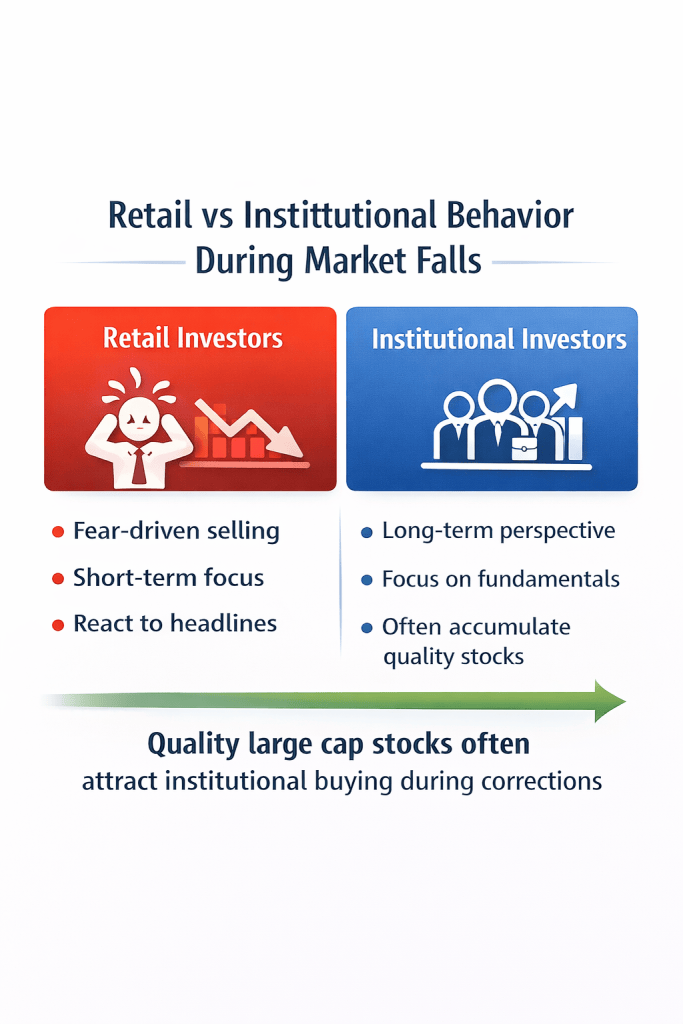
5. Institutional Investor Confidence
Large cap stocks also attract long-term institutional investors such as mutual funds, pension funds, and insurance companies.
Institutional investors typically:
- Focus on strong fundamentals
- Invest with long-term horizons
- Avoid panic selling during short-term volatility
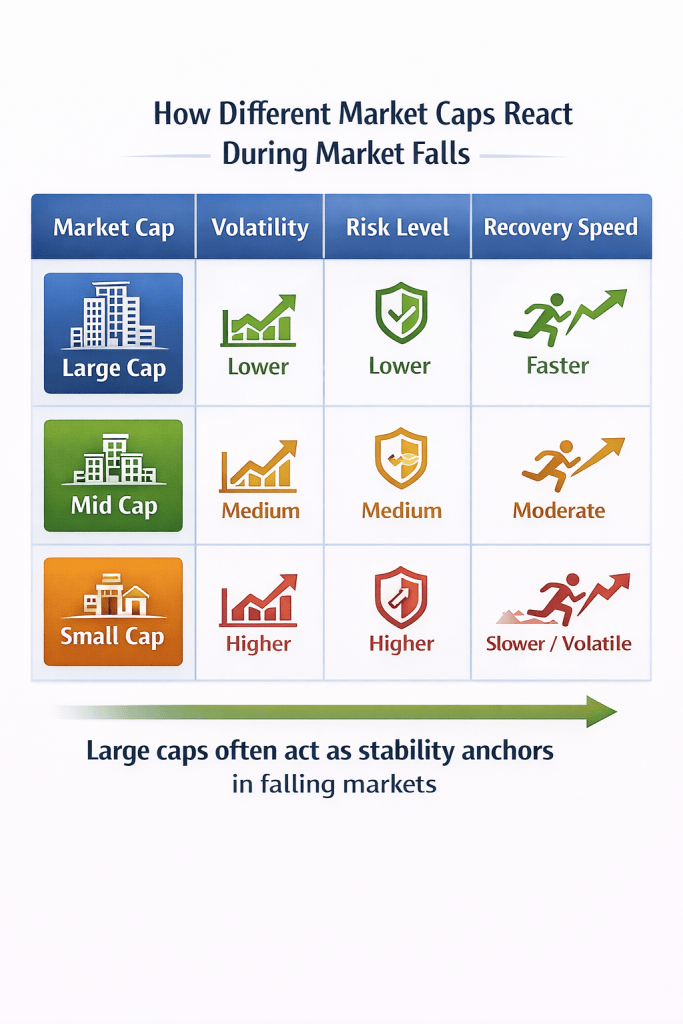
Because of this stable ownership structure, large cap stocks often experience less extreme price swings compared to smaller companies.
6. Inclusion in Major Indices
Many resilient companies are part of major indices like the Nifty 50.
Index inclusion provides several advantages:
- Continuous inflows from index funds and ETFs
- High liquidity
- Greater analyst coverage
- Global investor visibility
This constant institutional participation can help reduce volatility during market declines.
Here are some well-known large cap companies that often show resilience during market downturns due to strong fundamentals.
Examples of Resilient Large Cap Stocks
1. Reliance Industries
One of India’s largest companies, Reliance has diversified businesses across:
- Energy and petrochemicals
- Telecom through Jio
- Retail through Reliance Retail
This diversification helps the company maintain stable revenue streams even when one sector faces pressure. Its scale, market leadership, and strong balance sheet often make it relatively resilient during market corrections.
2. HDFC Bank
HDFC Bank is widely considered one of the strongest private sector banks in India.
Key strengths include:
- Consistent asset quality
- Strong capital adequacy
- High return on equity
- Large retail customer base
Because of its consistent earnings and disciplined lending practices, the bank has historically maintained investor confidence even during volatile market periods.
3. Tata Consultancy Services
TCS is one of the largest IT services companies in the world.
Reasons for resilience include:
- Long-term global contracts
- Strong cash flows
- High operating margins
- Debt-free balance sheet
The company also generates significant revenue from global clients, which provides geographic diversification.
4. Hindustan Unilever
Hindustan Unilever operates in the fast-moving consumer goods (FMCG) sector, which is often considered defensive.
Its products include everyday essentials such as:
- Personal care items
- Home care products
- Packaged foods
Since people continue purchasing essential products even during economic slowdowns, companies like HUL often experience relatively stable demand.
5. ITC Limited
ITC is another example of a diversified large cap company with businesses in:
- FMCG
- Cigarettes
- Hotels
- Paperboards
- Agri business
Its strong cash generation and diversified operations have historically helped the company maintain stability during market volatility.
Why Many Such Companies Are in the Nifty 50
Many of these resilient companies are part of the Nifty 50 index because they typically demonstrate:
- Strong corporate governance
- Consistent profitability
- Large market capitalization
- High liquidity
These characteristics make them core holdings for institutional investors, which often contributes to their relative stability during market downturns.
“These examples illustrate how strong fundamentals, stable demand, and market leadership can help certain large cap companies remain relatively resilient during market corrections.”
The Big Picture
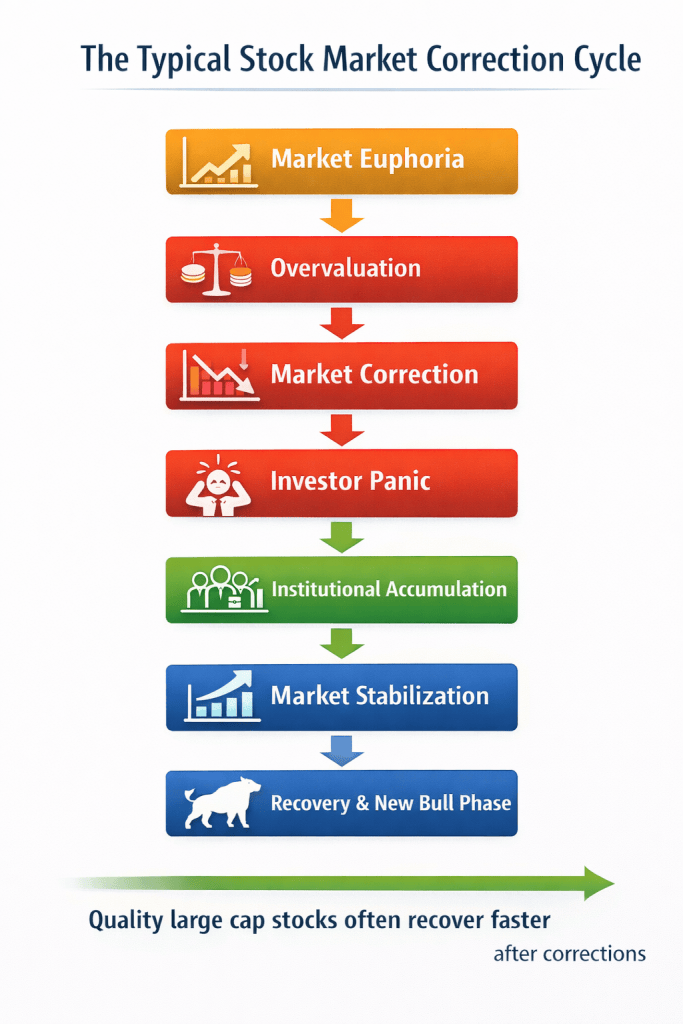
Market corrections are a normal part of the investing cycle. While many stocks may fall sharply during such phases, strong large cap companies often demonstrate resilience due to solid fundamentals, strong financials, and stable business models.
For investors and market observers, these companies often act as anchors of stability during volatile market periods.
Understanding why these businesses remain strong can help investors better interpret market movements and focus on long-term business quality rather than short-term price fluctuations.
Disclaimer
This article is for educational and informational purposes only and should not be considered as financial or investment advice. Stock market investments are subject to market risks, and readers should conduct their own research or consult a qualified financial advisor before making any investment decisions.


Leave a Reply