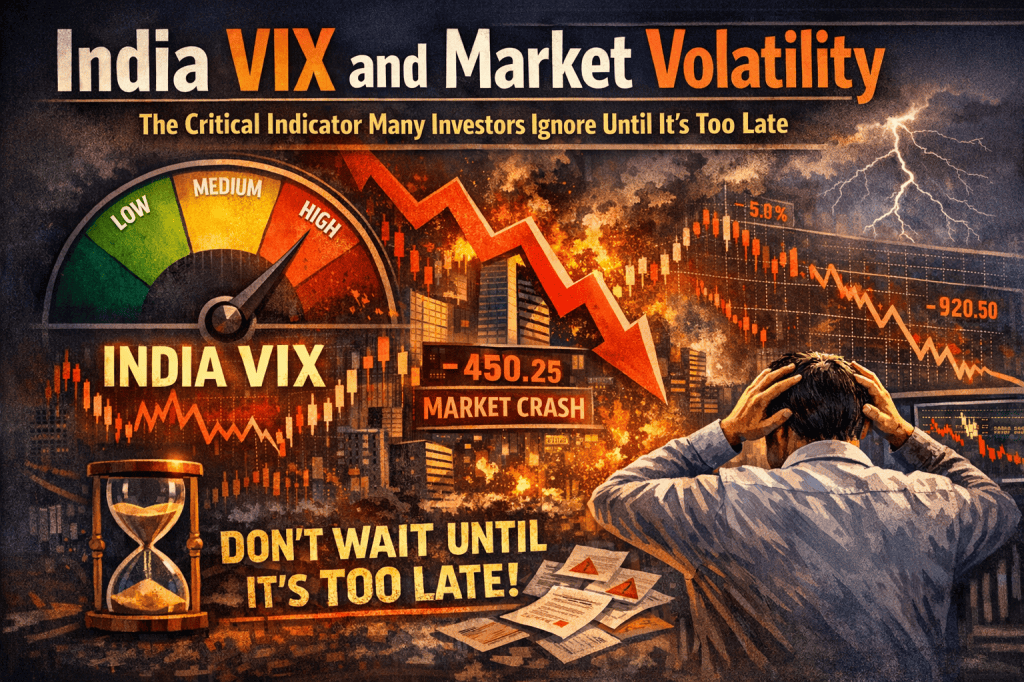
In calm markets, investors often focus on stock prices, earnings, and valuations. But when volatility suddenly rises, attention quickly shifts to one overlooked indicator — the volatility index.
In India, this is represented by the India VIX, often referred to as the market’s “fear gauge.”
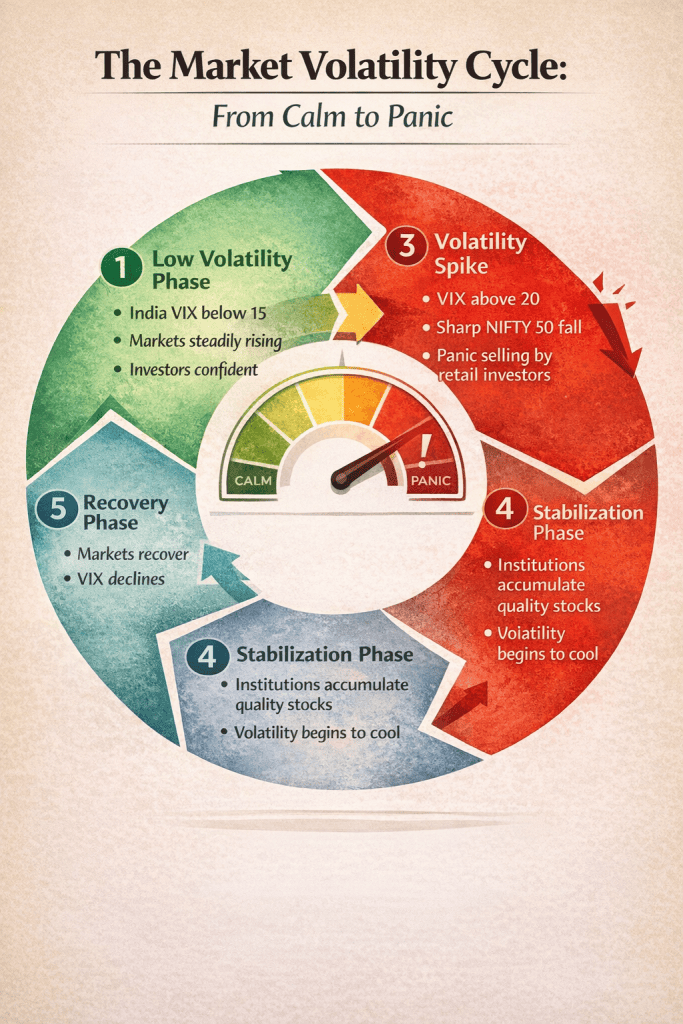
With the India VIX recently hovering around 21–23 levels, the market’s “fear gauge” is flashing early warning signals that volatility expectations are rising — a sign that investors may need to prepare for sharper swings in the NIFTY 50.

Despite its importance, many investors ignore volatility indicators until markets start swinging sharply. By then, the signals were already there.
Understanding how volatility indicators interact with liquidity conditions, institutional flows, and global risk sentiment can give investors a valuable edge in navigating uncertain markets.
1. India VIX: The Market’s Fear Gauge
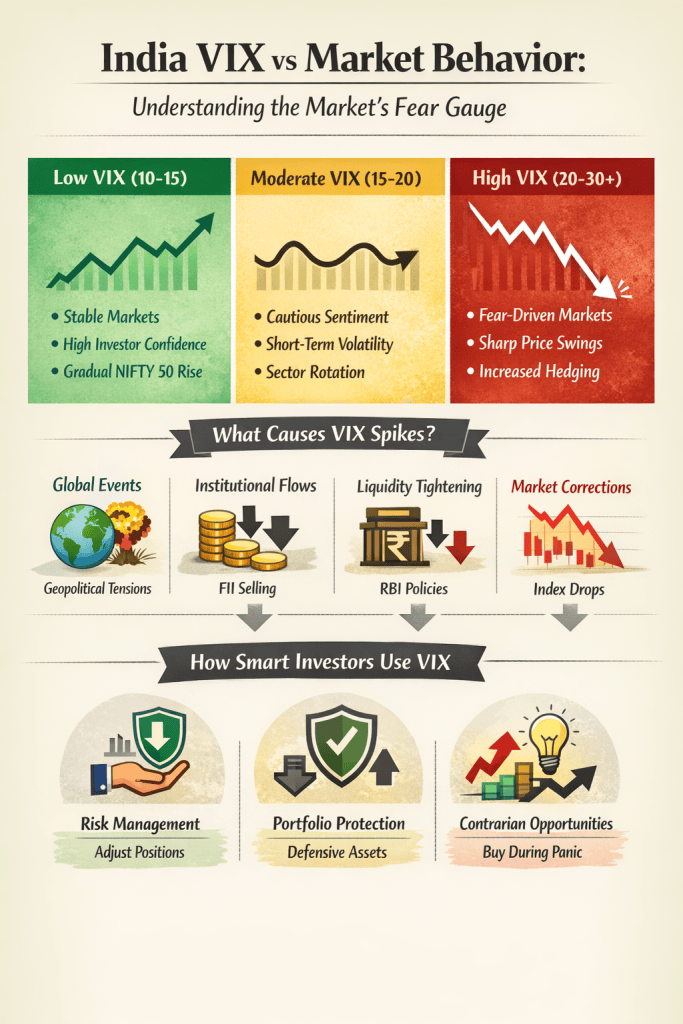
The India VIX measures the market’s expectation of volatility in the NIFTY 50 over the next 30 days.
It is calculated based on options pricing, which reflects how traders are positioning for potential market moves.
What It Indicates
Low VIX (10–15 range)
- Markets are calm
- Investor confidence is high
- Risk appetite is strong
Moderate VIX (15–20 range)
- Caution begins building
- Traders expect moderate swings
High VIX (above 20–25)
- Fear enters the market
- Sharp price swings become common
Historically, spikes in volatility often occur during geopolitical events, macro uncertainty, or sudden market corrections.
2. Liquidity Conditions: Fuel for Market Stability
Liquidity is the hidden driver behind volatility.
When liquidity is abundant:
- Markets absorb shocks easily
- Volatility remains low
- Corrections tend to be shallow
But when liquidity tightens:
- Selling pressure increases
- Bid-ask spreads widen
- Market swings become sharper
Central bank policies, interest rates, and financial system liquidity can significantly influence market volatility.
For example, tightening policies by institutions like the Reserve Bank of India can sometimes reduce liquidity, which may increase market volatility.
3. Institutional Flows: Smart Money Signals
Institutional investors play a major role in shaping market direction.
Key participants include:
- Foreign Institutional Investors (FIIs)
- Domestic Institutional Investors (DIIs)
- Mutual funds
- Pension funds
Large inflows from institutions often stabilize markets.
However, heavy selling from global investors can increase volatility in indices like the NIFTY 50 and BSE Sensex.
Institutional investors usually react quickly to macroeconomic changes, interest rate expectations, and geopolitical developments. Their flows often act as early signals of changing market sentiment.
4. Global Risk Sentiment: The External Shock Factor
In today’s interconnected world, volatility is not purely domestic.
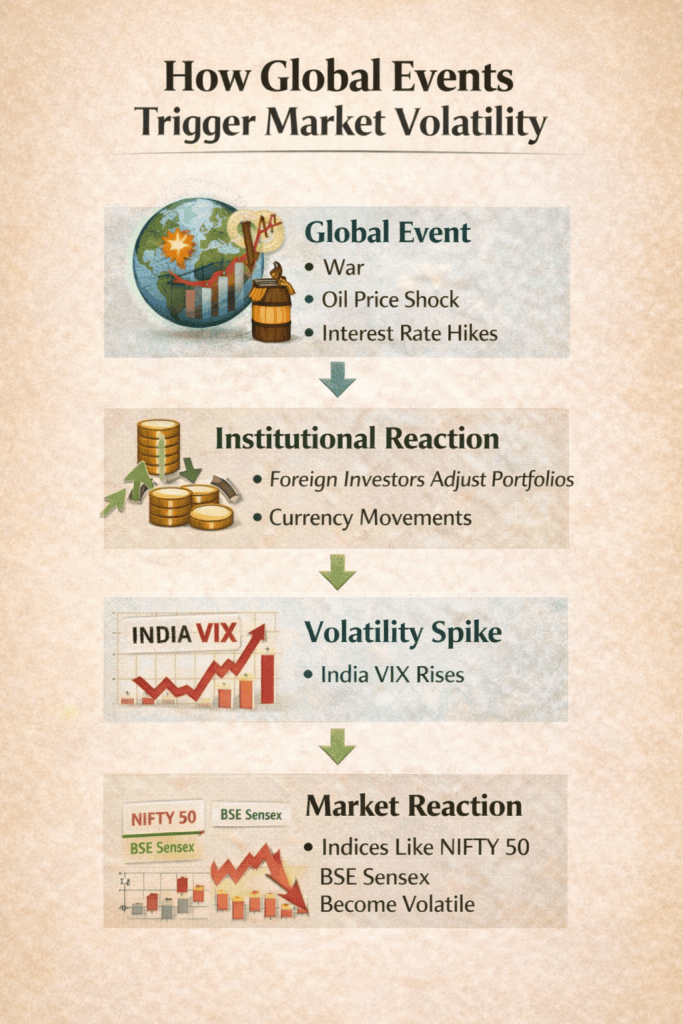
Global developments can quickly affect emerging markets like India.
Events that typically influence volatility include:
- Geopolitical tensions
- Commodity price shocks
- Global interest rate changes
- Currency movements
When global investors shift toward safer assets, emerging markets may experience capital outflows and increased volatility.
For example, geopolitical conflicts or energy price shocks can lead investors to move funds toward assets like gold, bonds, or the US dollar.
5. Why Most Investors Ignore Volatility Indicators
There are several reasons why volatility indicators remain underutilized:
1. Markets feel safe during calm periods
Low volatility makes investors complacent.
2. Price movements attract more attention
Most investors track prices rather than risk indicators.
3. Volatility seems complex
Options-based indicators like VIX appear technical and are often ignored by retail investors.
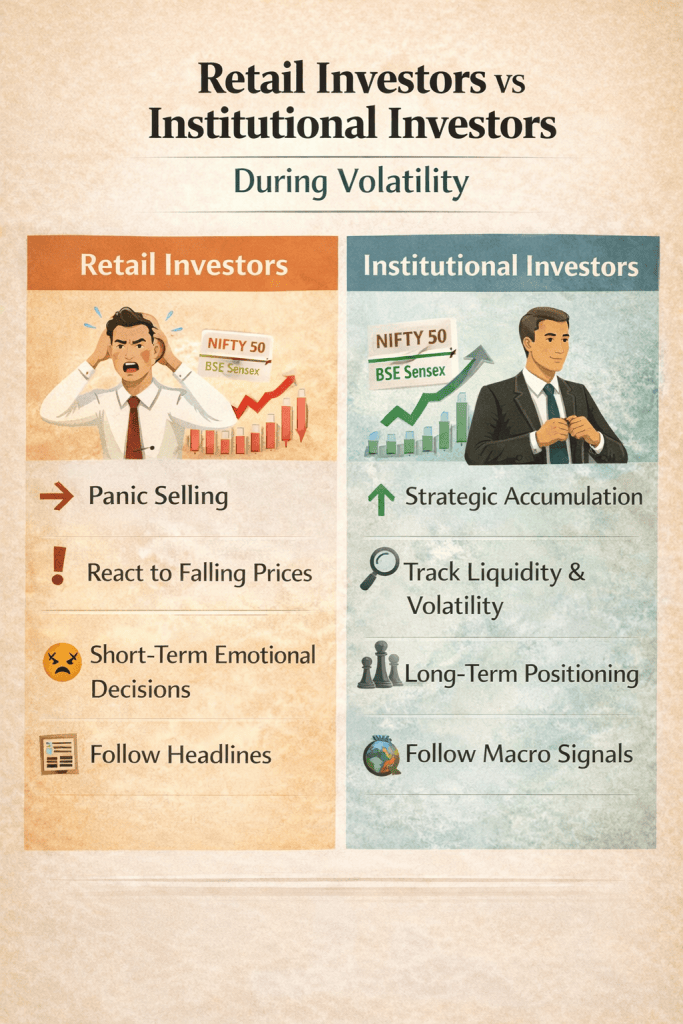
However, professional traders and institutional investors watch volatility closely because it often signals risk before price movements begin.
6. How Investors Can Use Volatility Indicators
Instead of reacting to market panic, investors can use volatility indicators proactively.
Some practical approaches include:
Risk management
Higher volatility may require smaller position sizes.
Portfolio diversification
Volatile periods often favor defensive sectors or alternative assets.
Contrarian opportunities
Extreme volatility spikes sometimes signal market bottoms, where panic selling creates long-term opportunities.
Monitoring volatility alongside liquidity and institutional flows can provide a more complete picture of market risk.
Conclusion
Indicators like the India VIX may not receive much attention during calm markets, but they become crucial when uncertainty rises.
Volatility does not occur in isolation. It is shaped by a combination of:
- Liquidity conditions
- Institutional money flows
- Global risk sentiment
Investors who track these signals are often better prepared for market turbulence, while those who ignore them may find themselves reacting only after volatility has already surged.
In investing, understanding risk indicators before panic begins can make a significant difference in long-term outcomes.
Disclaimer
This article is for educational and informational purposes only and should not be considered financial or investment advice. Stock markets are subject to risks and volatility. Investors should conduct their own research or consult a qualified financial advisor before making investment decisions.


Leave a Reply