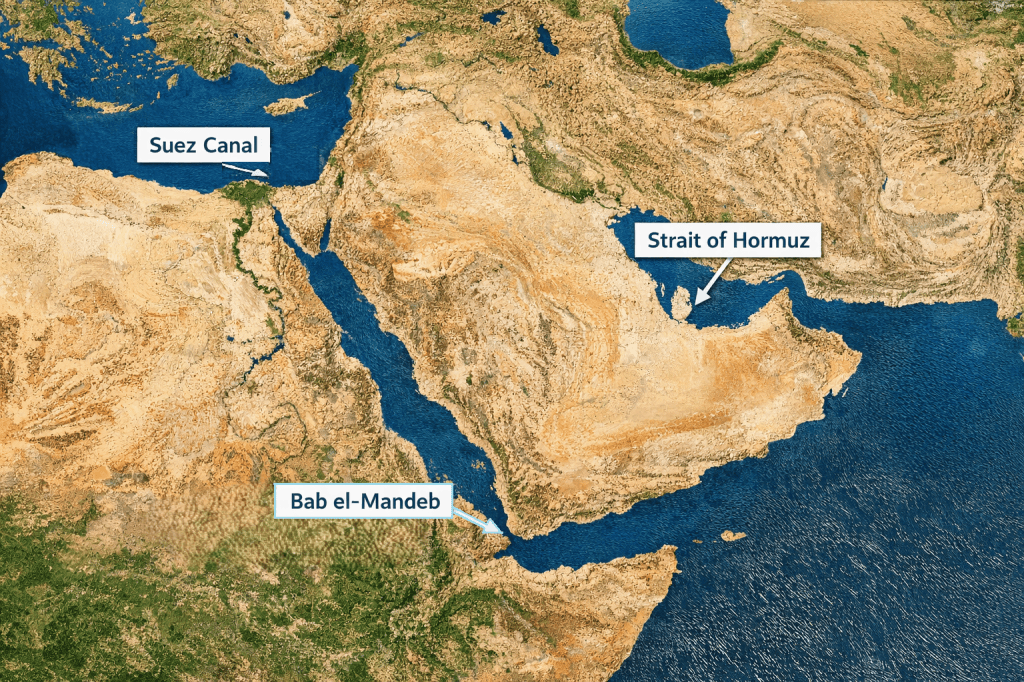
Bab el-Mandeb in the Spotlight: A Silent Artery of Global Trade Under Threat
In recent weeks, the Bab el-Mandeb Strait has suddenly moved into the global spotlight as Houthi Movement intensified its presence in the region.
At first glance, this narrow waterway might seem like just another geographic feature. But in reality, it is one of the most critical chokepoints in global cargo transport and logistics.
Let’s break down why this matters — and why the world is watching closely.
What is Bab el-Mandeb & Why is it Important?
The Bab el-Mandeb Strait connects the
- Red Sea
to the - Gulf of Aden
It serves as a gateway between Europe, Asia, and Africa, forming a vital link in the route:
➡️ Asia → Middle East → Europe (via the Suez Canal)
Why it matters:
- ~10% of global trade passes through this corridor
- Massive volumes of oil and LNG shipments move daily
- It is crucial for container shipping between Asia and Europe
In simple terms:
If this strait is disturbed, global supply chains feel the shock almost instantly.
Bab el-Mandeb vs Strait of Hormuz: A Strategic Comparison
Let’s compare it with another critical chokepoint: the Strait of Hormuz
| Factor | Bab el-Mandeb | Strait of Hormuz |
|---|---|---|
| Location | Red Sea gateway | Persian Gulf exit |
| Primary Role | Trade + container shipping | Oil exports |
| Global Oil Flow | Moderate | Extremely high (~20% of global oil) |
| Trade Diversity | High (containers, goods) | Mostly energy |
| Alternative Routes | Limited & costly | Very limited |
| Impact of Disruption | Supply chain delays | Energy crisis |
Key Insight:
- Hormuz = Energy lifeline of the world
- Bab el-Mandeb = Trade artery connecting continents
Both are critical — but Bab el-Mandeb directly affects global logistics efficiency, while Hormuz primarily impacts energy prices.
What Happens If Bab el-Mandeb is Blocked?
If this chokepoint is disrupted or blocked, the consequences can ripple across the global economy.
🌍 Global Impact
1. Shipping Routes Get Longer
- Ships must reroute around the Cape of Good Hope
- Adds 10–15 days to travel time
2. Freight Costs Surge
- Fuel costs increase
- Insurance premiums spike (war-risk zones)
3. Supply Chain Disruptions
- Delays in delivery of goods
- Container shortages
- Just-in-time systems break down
4. Inflationary Pressure
- Higher logistics costs → higher product prices globally
Impact on India 🇮🇳
For a country like India, the implications are significant.
1. Trade Disruptions
India’s exports to Europe rely heavily on this route. A blockage means:
- Delayed shipments
- Reduced competitiveness
2. Rising Import Costs
- Crude oil and goods become more expensive
- Logistics costs increase for imports
3. Pressure on Rupee & Inflation
- Higher import bills widen trade deficit
- Inflation may rise due to costlier goods
4. Impact on Key Sectors
- Pharmaceuticals (export delays)
- Textiles & manufacturing
- Auto & electronics supply chains
The Bigger Picture: Why This Matters Now
With rising tensions and the involvement of the Houthi Movement, the risk is no longer theoretical.
Global trade is already fragile due to:
- Geopolitical conflicts
- Supply chain restructuring
- Energy volatility
A disruption at Bab el-Mandeb could act as a multiplier of existing global economic stress.
Final Thought
Chokepoints like the Bab el-Mandeb Strait and the Strait of Hormuz are not just geographic features — they are pressure points of the global economy.
When they remain stable, trade flows smoothly.
When they are threatened, the entire world feels the consequences.
Disclaimer
This article is for informational and educational purposes only. It does not constitute financial, investment, or geopolitical advice. Readers are encouraged to conduct their own research or consult professionals before making decisions based on global developments.


Leave a Reply