🌍 Introduction
In recent times, Kharg Island has started appearing more frequently in global discussions — from energy markets to geopolitics.
But why is everyone suddenly talking about this relatively unknown island?
The answer lies beneath the surface: oil, trade, and global economic stability.
Kharg Island, along with a cluster of nearby Iranian islands, forms one of the most critical — yet underappreciated — pillars of the global energy system.
🛢️ Kharg Island: Iran’s Economic Lifeline
Kharg Island is not just an island — it is the core of Iran’s oil export infrastructure.
- Nearly 90% of Iran’s crude oil exports are shipped from here
- It serves as the main terminal where oil from inland fields is collected and exported
- The island has massive storage facilities and high-capacity loading terminals
👉 In simple terms:
Kharg Island is where Iran converts oil into revenue
Without it, the country’s ability to participate in global energy trade would be severely constrained.
🏝️ The Supporting Network: Iran’s Other Strategic Islands
Kharg doesn’t operate alone. Several nearby islands act as support nodes in Iran’s energy network:
- Lavan Island – Secondary oil export terminal
- Sirri Island – Supports offshore oil operations
- Jask Port – A developing strategic export hub outside the Gulf
These locations help:
- Diversify export routes
- Reduce overdependence on a single terminal
- Enhance resilience in times of disruption
👉 Still, none match the scale and dominance of Kharg Island.
🌐 A Key Link in the Global Energy Chain
What makes these islands globally important is their location near the
Strait of Hormuz — one of the most critical trade routes on Earth.
- Around 20% of the world’s oil supply passes through this narrow corridor
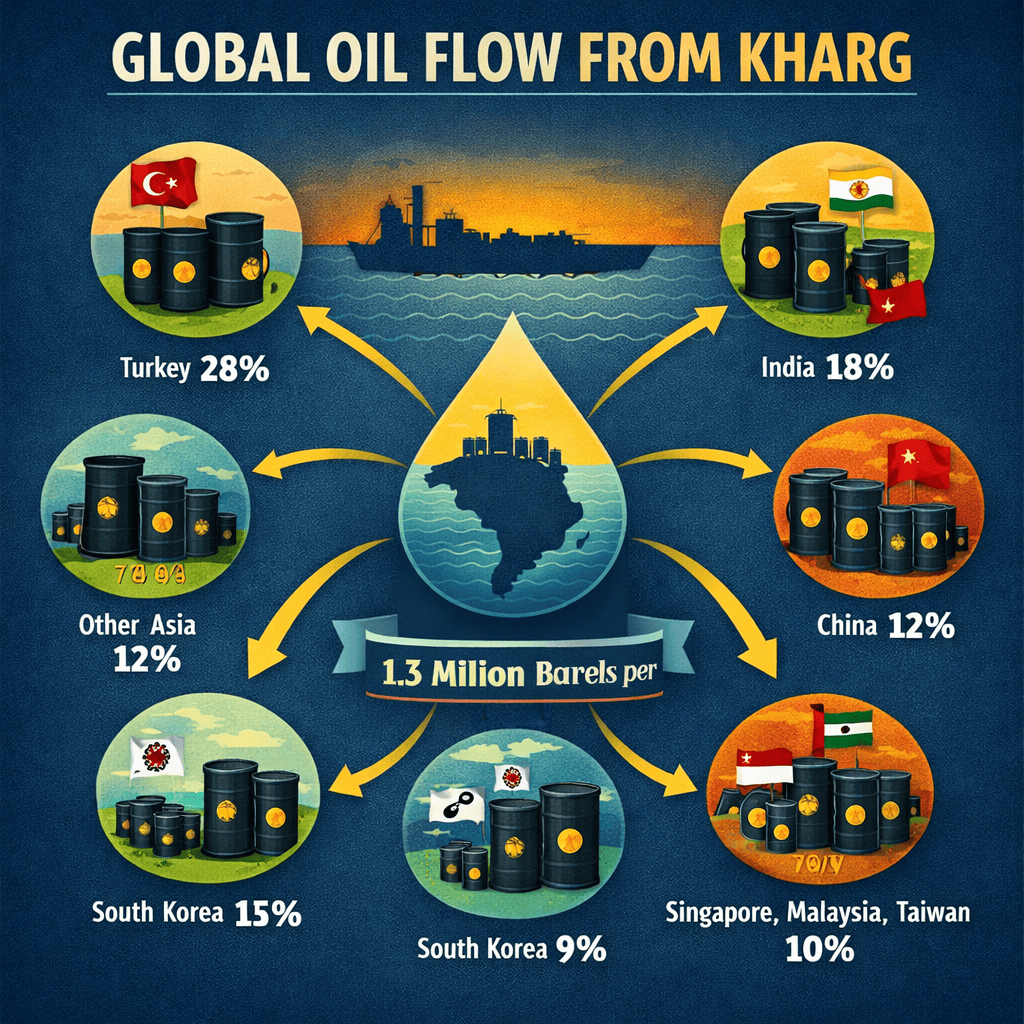
- Major economies like China, India, Japan, and Europe depend on this flow
- Tankers carrying oil from Kharg and nearby terminals feed directly into global supply chains
👉 This transforms Kharg from a national asset into a global economic connector
🚢 Why Global Logistics Depends on These Islands
The importance of Kharg and neighboring islands extends beyond oil production — it directly impacts global logistics systems.
1. Energy Supply Chains
Oil loaded from these terminals fuels:
- Transportation networks
- Manufacturing industries
- Power generation systems
Any disruption here affects everything from fuel prices to factory output.
2. Maritime Trade Stability
The Persian Gulf is one of the busiest shipping zones in the world.
- Tankers queue near these islands for loading
- Shipping routes are optimized around these terminals
- Port operations here influence global tanker availability
👉 Smooth functioning = stable global trade flows
3. Insurance and Shipping Costs
Even minor uncertainties in this region can:
- Increase shipping insurance premiums
- Raise freight costs
- Delay cargo deliveries
These costs eventually get passed on to consumers worldwide.
📊 Why Everyone Is Talking About Kharg Island
Kharg Island has become a focal point in global conversations because it represents:
- A highly concentrated energy hub
- A single-point dependency for a major oil exporter
- A critical node in global supply chains
In a world already sensitive to:
- Inflation
- Energy security
- Supply chain disruptions
👉 Even the possibility of instability around such hubs attracts attention.
🌍 The Bigger Insight: Small Place, Massive Impact
Kharg Island and its neighboring infrastructure highlight an important reality:
👉 Global systems often depend on a few critical locations
These islands may seem geographically small, but their influence extends across:
- Oil markets
- Shipping networks
- National economies
🧠 Final Thought
Understanding places like Kharg Island helps us see how deeply interconnected the modern world is.
A single island in the Persian Gulf can influence:
- Fuel prices in India
- Manufacturing in Europe
- Economic stability across continents
👉 That’s why Kharg Island is no longer just a location —
it’s a symbol of global economic interdependence.
⚠️ Disclaimer
This article is intended for informational and educational purposes only. It is based on publicly available knowledge and general analysis of global energy and logistics systems. The content does not represent political opinions or forecasts. Readers are encouraged to refer to multiple sources for a comprehensive understanding of the topic.


Leave a Reply