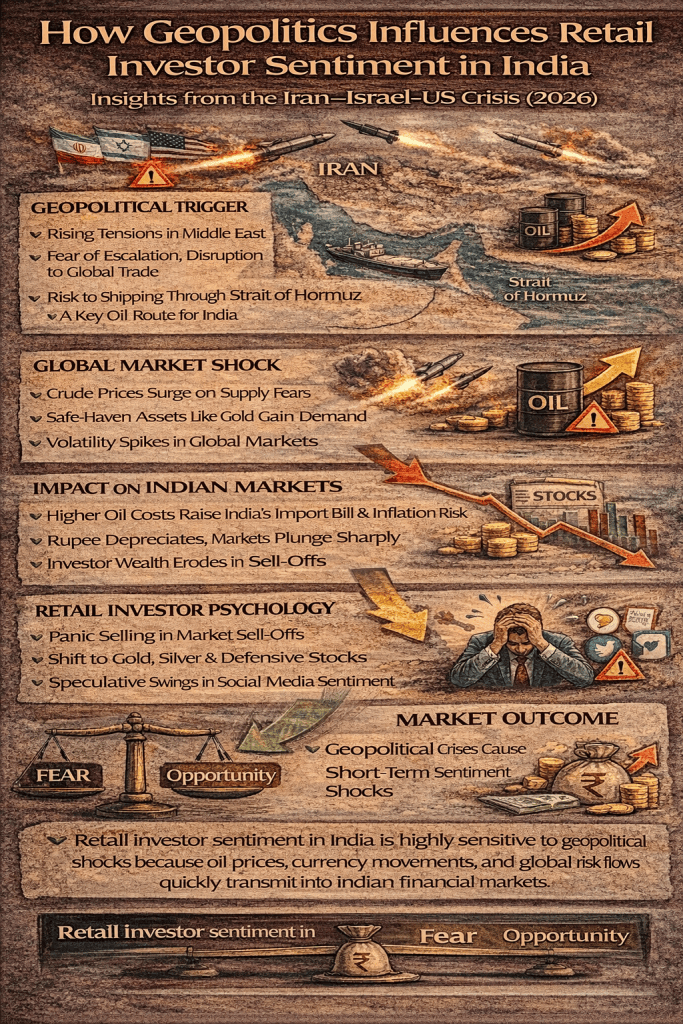
Financial markets do not move only on economic data or corporate earnings. Often, investor sentiment plays an equally powerful role, especially during periods of geopolitical tension.
The ongoing Middle East conflict involving Iran, Israel, and the United States has once again highlighted how geopolitical developments can influence market psychology, capital flows, and retail investor behaviour.
For Indian retail investors—whose participation in equity markets has grown rapidly in recent years—geopolitical developments can act as an important sentiment indicator, shaping short-term market movements and investment trends.
Indices such as the Nifty 50 and Sensex often react sharply to global geopolitical news, reflecting shifts in investor risk appetite.
Understanding these sentiment shifts can help investors avoid emotional decisions and better navigate volatile markets.
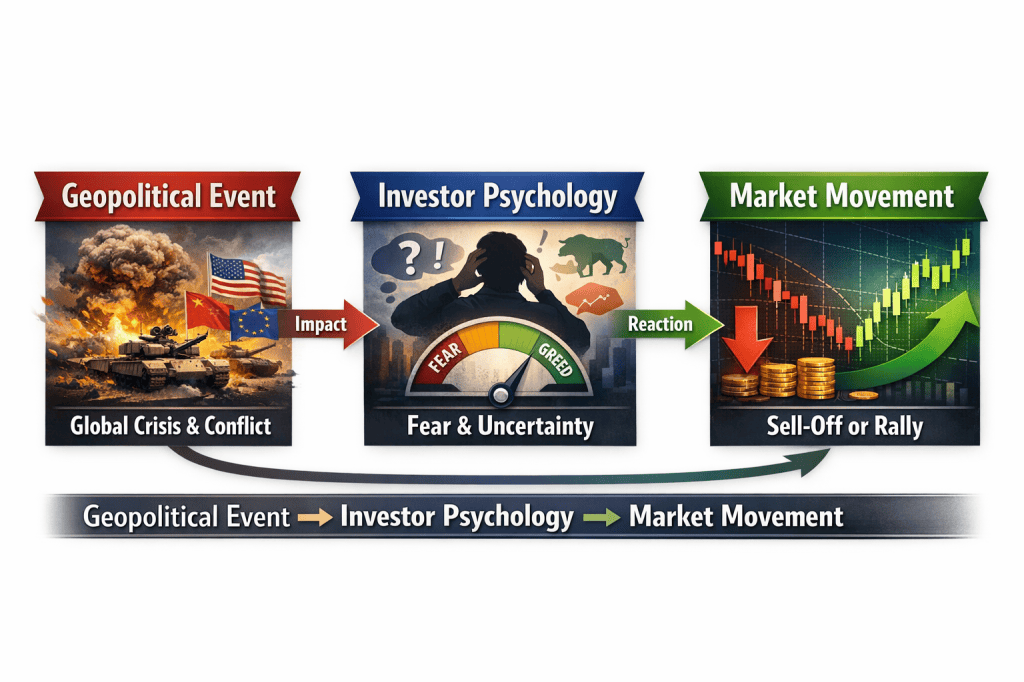
1. Behavioral Biases During Geopolitical Tensions
Geopolitical crises tend to amplify emotional reactions among investors. Retail investors are particularly prone to behavioral biases, which can lead to exaggerated market reactions.
Loss Aversion
One of the most common biases is loss aversion, where investors fear losses more than they value gains.
During geopolitical tensions, negative headlines about oil supply disruptions, military escalation, or global trade disruptions can trigger panic selling—even if the long-term economic impact remains uncertain.
Recency Bias
Retail investors also tend to give greater importance to recent events, assuming that current geopolitical tensions will continue indefinitely.
However, history shows that markets typically recover once uncertainty subsides, even after significant geopolitical shocks.
Herd Behavior
Retail investors often follow broader market sentiment.
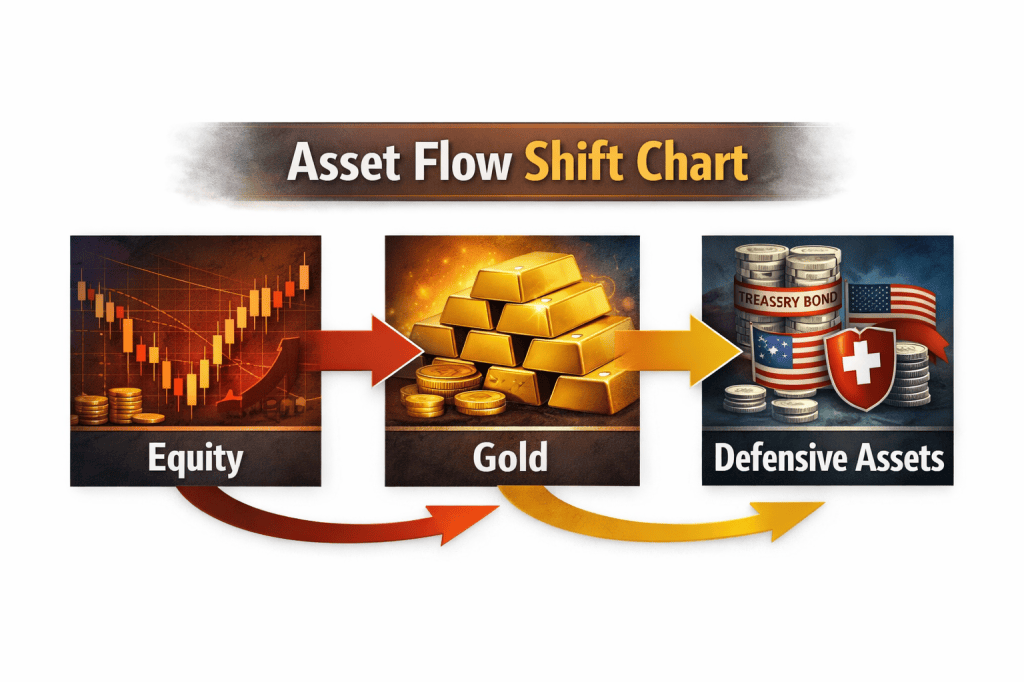
When institutional investors move toward defensive assets such as gold or energy stocks, retail investors tend to follow the same trend. This herd behavior can amplify volatility in indices like the Nifty 50.
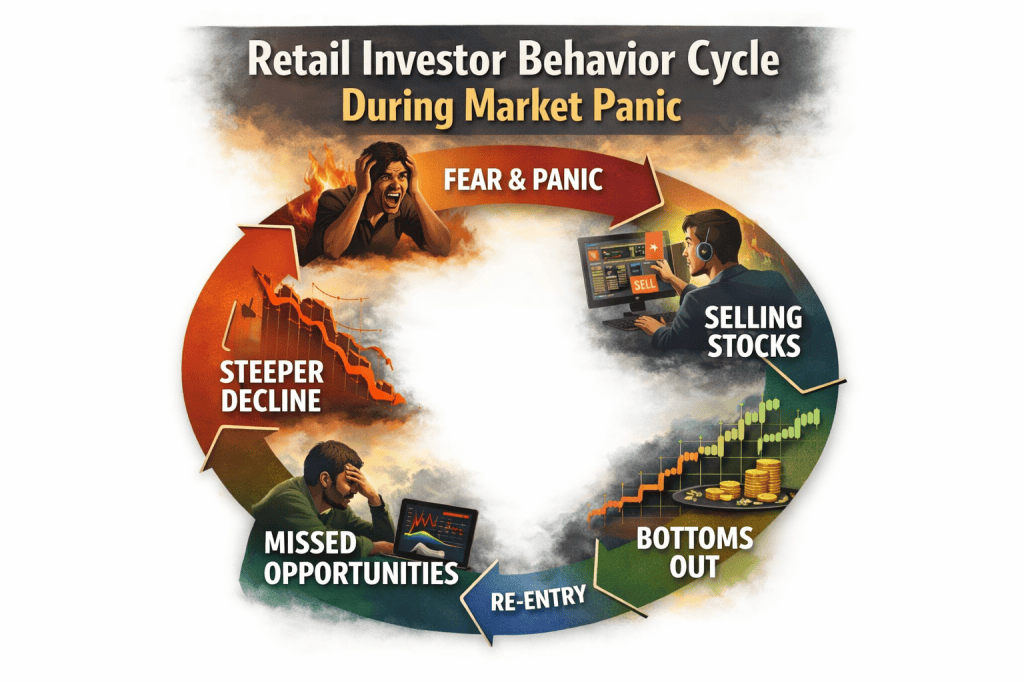
2. Retail Participation and Market Movements in India
Over the past few years, India has witnessed a surge in retail participation in financial markets.
Millions of new investors have entered the market through:
- Direct stock investments
- Mutual fund systematic investment plans (SIPs)
- Exchange-traded funds (ETFs)
Because of this rising participation, retail sentiment now plays a more visible role in market movements.
Market Volatility
Geopolitical tensions typically increase volatility in the markets. The India VIX, often called the “fear gauge,” tends to spike during periods of global uncertainty.
Higher volatility reflects investor nervousness and increased hedging activity.
Sector Rotation
During geopolitical crises, investors often rotate toward sectors perceived as beneficiaries of global uncertainty.
In the Indian market, such sectors may include:
- Energy and oil exploration companies
- Defense sector stocks
- Commodity-related businesses
Meanwhile, sectors sensitive to crude oil prices—such as aviation, paints, logistics, and oil marketing companies—may face margin pressures if oil prices rise sharply.
Retail Selling vs Institutional Buying
In many market corrections triggered by geopolitical news, retail investors tend to sell in panic, while institutional investors often use the opportunity to accumulate quality stocks at lower valuations.
Understanding this pattern can help retail investors avoid emotional investment decisions.
3. ETF and Investment Product Trends During Geopolitical Crises
Investment flows into different asset classes often reveal how investors perceive geopolitical risk.
In recent years, Indian investors have increasingly used ETFs and mutual funds to adjust their portfolios during periods of uncertainty.
Rise in Gold ETF Investments
Gold has traditionally been considered a safe-haven asset during geopolitical instability.
When geopolitical tensions rise, Indian investors often increase allocations to gold through:
- Gold ETFs
- Sovereign Gold Bonds
- Gold mutual funds
This shift reflects a desire to hedge against market volatility and currency fluctuations.
Commodity and Energy Exposure
Geopolitical tensions in the Middle East often impact global crude oil prices, which can influence investment flows into energy-related stocks and funds.
Since India imports a large portion of its crude oil requirements, rising oil prices can also affect inflation, fiscal balances, and corporate profitability.
Diversification Through ETFs
Exchange-traded funds allow retail investors to quickly adjust exposure across sectors and asset classes.
During geopolitical uncertainty, investors often use ETFs to diversify into:
- Gold
- Commodities
- Defensive sectors
This makes ETF flows a useful indicator of changing investor sentiment.
What Indian Retail Investors Can Learn
Geopolitical developments should not be viewed only as risks—they can also serve as signals about market sentiment and investor positioning.
By observing market reactions during geopolitical tensions, retail investors can gain insights into:
- Market risk appetite
- Sector rotation trends
- Safe-haven asset demand
- Institutional vs retail investor behaviour
However, reacting impulsively to geopolitical headlines often leads to poor investment outcomes.
Historically, markets have shown resilience and have recovered after most geopolitical shocks.
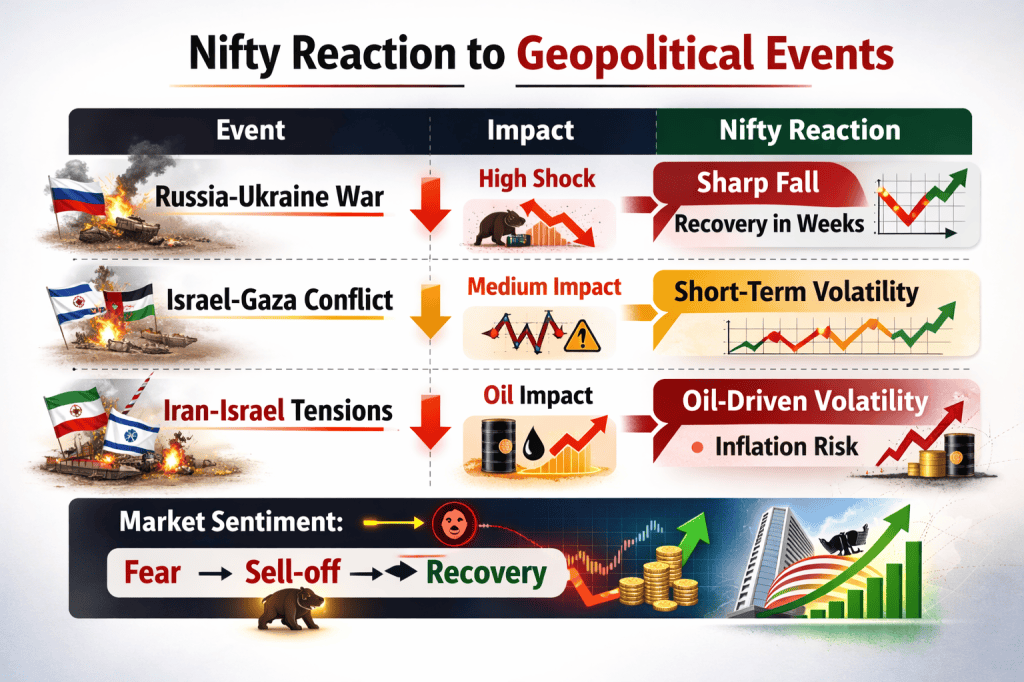
Key Takeaways
• Geopolitical tensions influence markets primarily through investor sentiment and expectations.
• Retail investors often react through behavioral biases such as herd mentality and loss aversion.
• ETF flows, especially into gold and defensive assets, can act as real-time sentiment indicators.
• Short-term volatility in indices like the Nifty 50 and Sensex does not always translate into long-term market damage.
For disciplined investors, geopolitical developments should be treated as contextual signals rather than triggers for panic-driven decisions.
Maintaining a diversified portfolio and focusing on long-term investment goals remains the most effective strategy.
Disclaimer
This article is for educational and informational purposes only and should not be considered financial or investment advice. Investments in financial markets are subject to risks, including the possible loss of principal. Investors should conduct their own research or consult a qualified financial advisor before making any investment decisions. The views expressed are based on current market observations and publicly available information, which may change without notice.


Leave a Reply