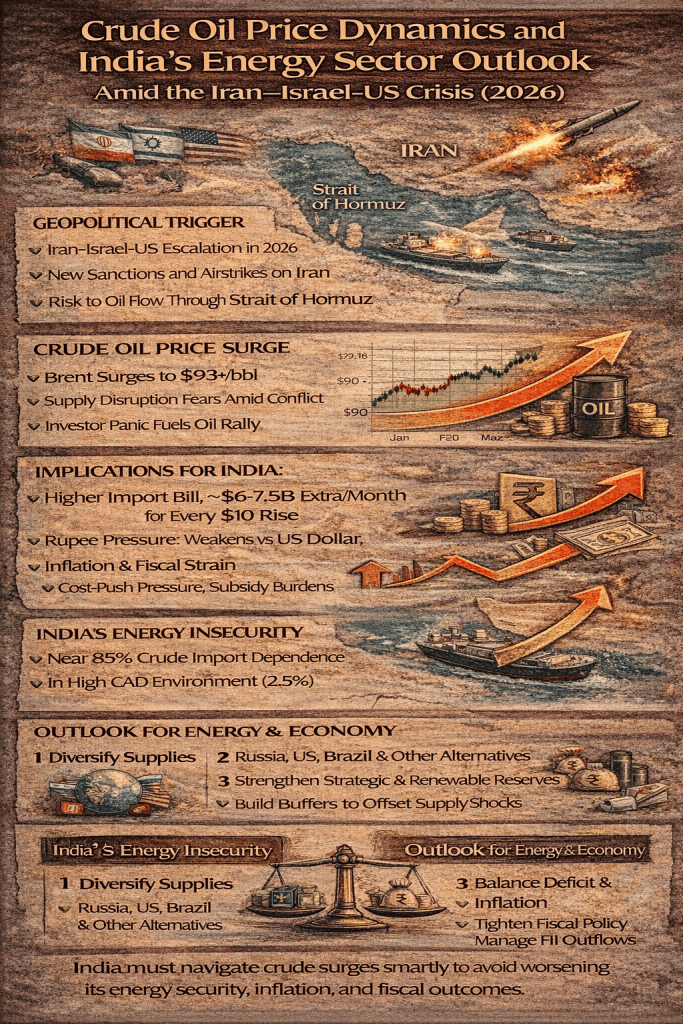
Global crude oil markets have entered a period of heightened volatility as geopolitical tensions escalate in the Middle East, particularly due to the ongoing Iran–Israel–US conflict. Oil prices are increasingly influenced by two major forces: OPEC+ production decisions and geopolitical supply risks.
For India—one of the world’s largest energy importers—these dynamics have significant implications for the economy, inflation, fiscal balance, and stock market sectors, especially energy companies.
This article explores how crude oil price movements are shaping India’s energy sector outlook, focusing on PSU oil companies, private energy players, and broader macroeconomic effects.
1. OPEC+ Decisions vs Geopolitical Tensions
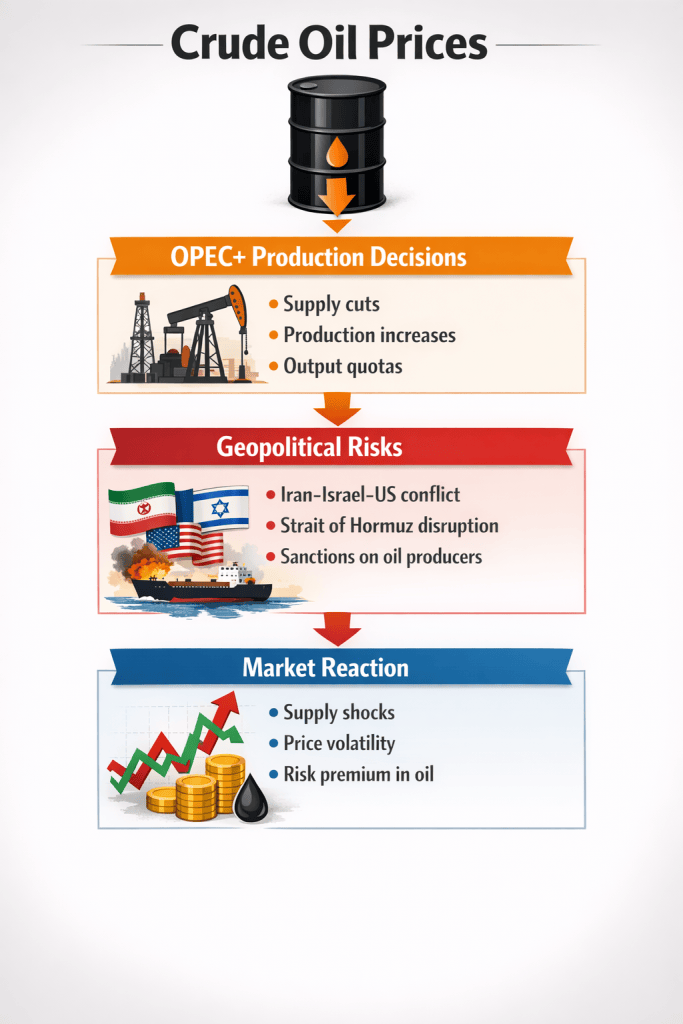
Global oil prices are largely determined by two competing forces:
OPEC+ Supply Strategy
The OPEC+ alliance continues to influence global oil prices through coordinated production adjustments. Recently, the group even increased output quotas by around 206,000 barrels per day to stabilize markets amid geopolitical uncertainty. (The Times of India)
Such decisions aim to prevent excessive price spikes that could disrupt global economic stability.
Geopolitical Risk Premium
At the same time, the ongoing conflict involving Iran, Israel, and the United States has created a geopolitical risk premium in crude oil prices.
- Brent crude recently surged close to $90 per barrel amid fears of supply disruptions. (The Guardian)
- Any disruption in critical shipping routes like the Strait of Hormuz could trigger further spikes.
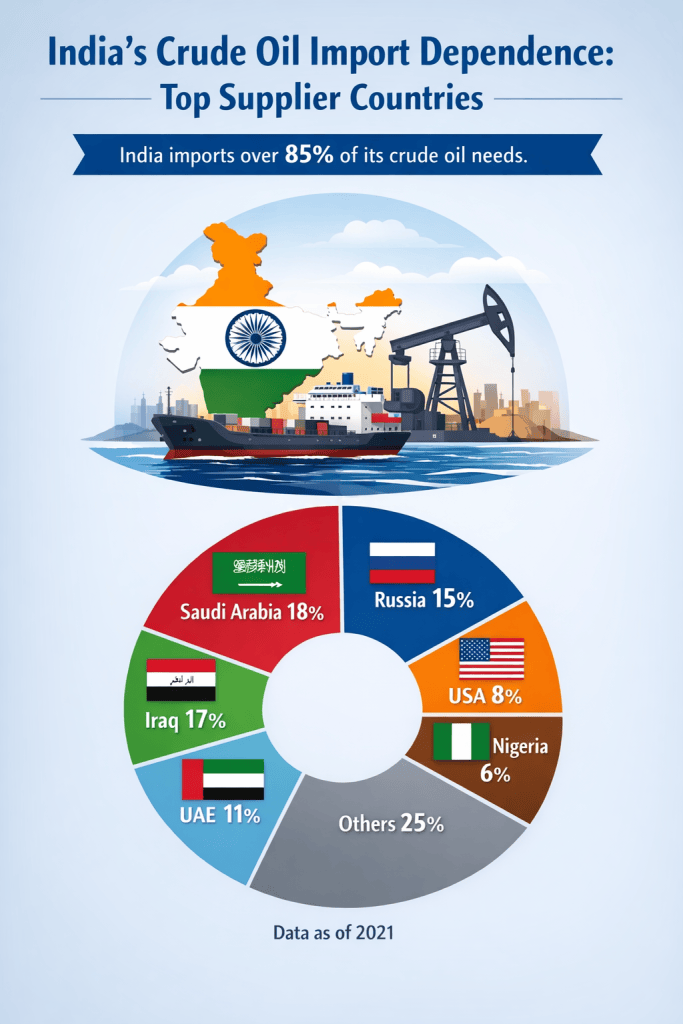
For India, this creates a difficult situation because the country imports over 85% of its crude oil requirements, making it highly vulnerable to global price shocks. (The Economic Times)
In simple terms:
OPEC+ controls supply, while geopolitics creates uncertainty.
Together, they determine the direction of global oil prices.
2. India’s Energy Demand is Still Growing
Despite the rise of renewable energy and EV adoption, India’s oil demand continues to grow due to:
- Expanding transportation sector
- Rapid urbanization
- Manufacturing growth
- Rising income levels
India’s oil consumption is projected to reach around 6 million barrels per day, making it one of the fastest-growing energy markets globally. (The Economic Times)
This structural demand growth means crude oil will remain critical to India’s economy for decades.
3. PSU Energy Stocks vs Private Energy Players
The Indian energy sector includes two major categories of companies:
PSU Oil Companies
Examples include:
- Indian Oil Corporation (IOCL)
- Bharat Petroleum (BPCL)
- Hindustan Petroleum (HPCL)
- ONGC
These companies often face policy constraints.
During periods of high crude prices, governments may delay fuel price increases to control inflation, which compresses the margins of state-run oil marketing companies.
Key characteristics of PSU energy companies:
- Strong refining and distribution networks
- Exposure to government pricing policies
- Dividend-heavy stocks
- Cyclical earnings depending on crude prices
In volatile oil markets, PSU oil companies may face temporary under-recoveries or margin pressure.
Private Energy Companies
Major private players include:
- Reliance Industries
- Nayara Energy
- Private LNG and gas operators
Private companies often enjoy:
- Greater pricing flexibility
- Strong petrochemical integration
- Export-oriented refining margins
For example, integrated energy companies with petrochemical businesses can benefit from volatility in crude prices, as refining and petrochemical margins sometimes expand during supply disruptions.
This makes private energy companies structurally more resilient compared to PSU oil marketing companies.
4. Inflation Impact on the Indian Economy
Crude oil prices directly influence India’s inflation trajectory.
If crude prices remain elevated:
- Transport costs increase
- Food inflation rises due to logistics expenses
- Manufacturing input costs rise
Economists estimate that crude oil above $80 per barrel could raise India’s CPI inflation by 0.2–0.4 percentage points. (Moneycontrol)
Additionally, sustained high oil prices could weaken economic growth by reducing household spending and increasing industrial costs.
Recent analysis suggests the ongoing West Asia conflict could raise inflation and weaken GDP growth if oil prices stay elevated. (The Economic Times)
5. Fuel Subsidies and Fiscal Pressure
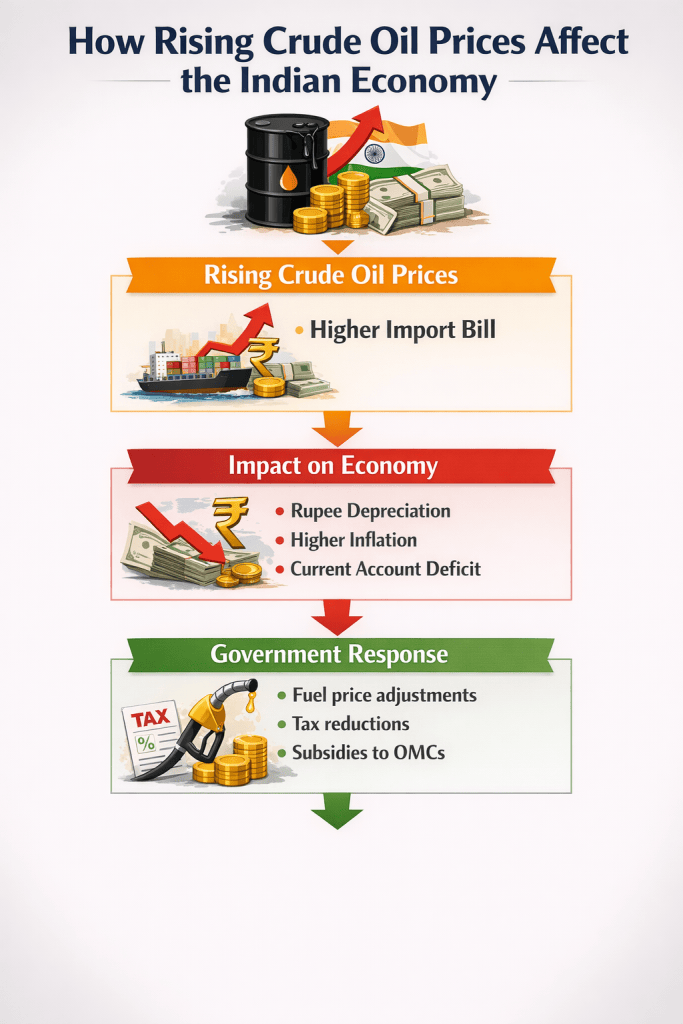
When crude oil prices rise sharply, the Indian government has three options:
- Increase retail fuel prices
- Reduce fuel taxes
- Provide subsidies to oil companies
Each option has consequences.
If Fuel Prices Rise
- Inflation increases
- Consumer demand slows
If Taxes Are Reduced
- Government revenue declines
If Subsidies Are Increased
- Fiscal deficit widens
Additionally, rising crude prices can increase the Current Account Deficit (CAD) because India spends significantly more on oil imports.
Even a $10 increase in crude prices can widen India’s CAD by around 0.3–0.5% of GDP. (Moneycontrol)
This also puts pressure on the Indian Rupee, which recently touched record lows amid rising oil prices and geopolitical tensions. (Reuters)
6. Stock Market Outlook for the Energy Sector
For investors, crude oil volatility creates both risks and opportunities.
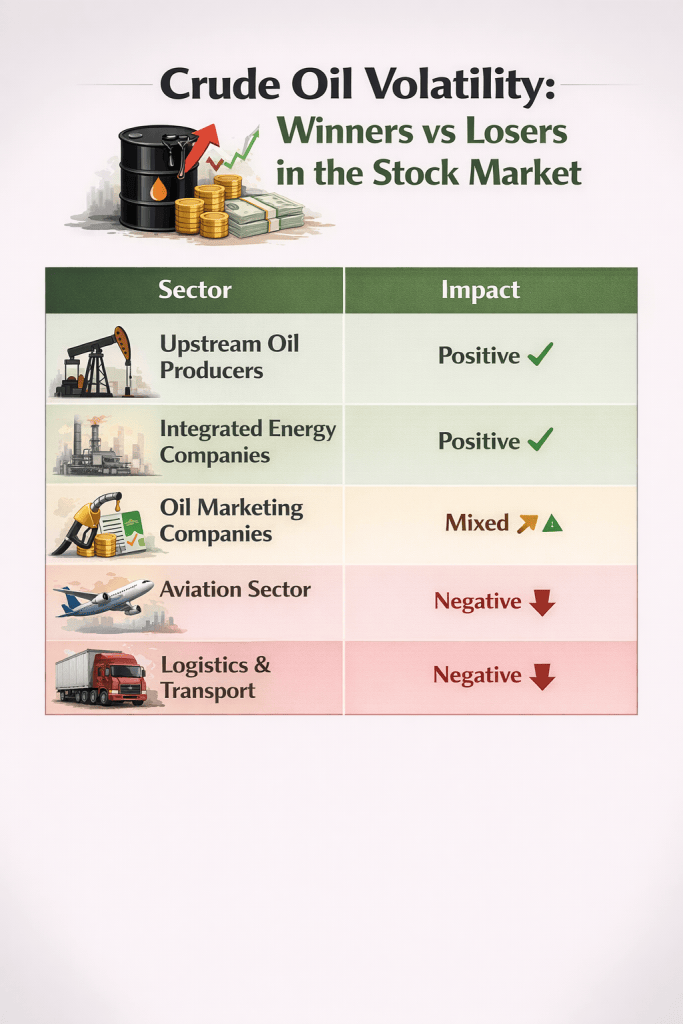
Potential Beneficiaries
- Upstream companies (like ONGC)
- Integrated energy firms
- Petrochemical companies
Potentially Vulnerable
- Oil marketing companies during price freezes
- Aviation sector due to rising fuel costs
- Transport and logistics companies
Long-term investors should focus on companies with:
- Strong refining margins
- Integrated petrochemical businesses
- Stable balance sheets
Conclusion
The ongoing Iran–Israel–US conflict has once again highlighted how geopolitical tensions can disrupt global energy markets. Combined with OPEC+ production decisions, these developments are creating significant volatility in crude oil prices.
For India, the implications are broad:
- Rising inflation risks
- Pressure on fiscal balances
- Currency volatility
- Sectoral shifts in the stock market
While PSU oil companies may face short-term policy pressures, private integrated energy players could benefit from global market dynamics.
In the long term, India’s strategy must focus on energy diversification, strategic reserves, and renewable energy expansion to reduce vulnerability to global oil shocks.
Disclaimer
This article is for educational and informational purposes only and should not be considered financial or investment advice. Stock market investments are subject to market risks. Readers are advised to conduct their own research or consult a qualified financial advisor before making investment decisions.


Leave a Reply