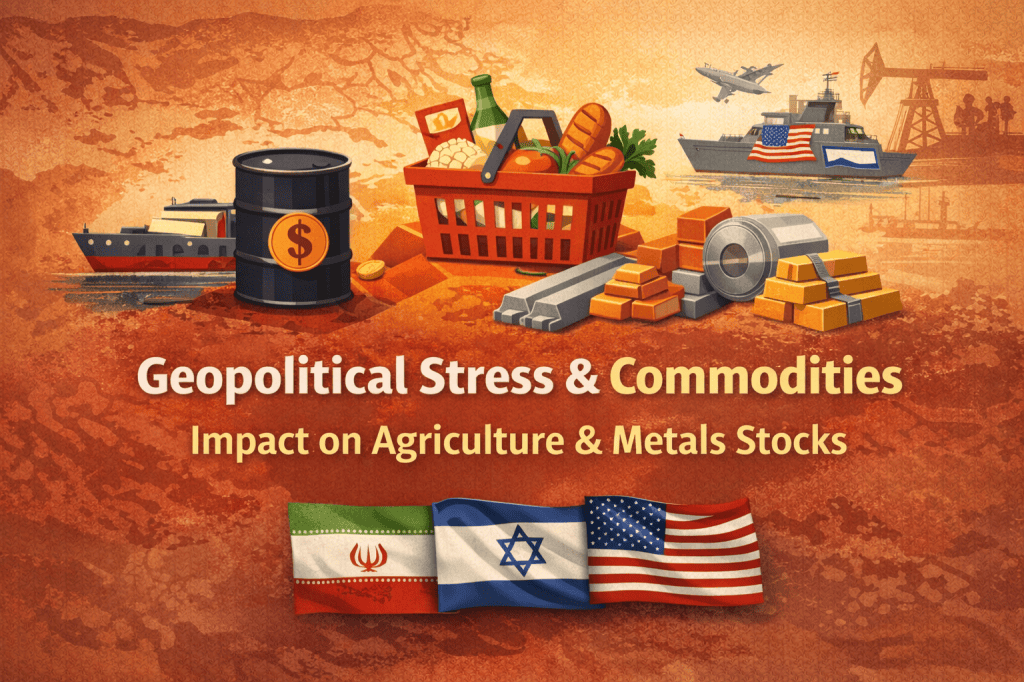
The ongoing Middle East crisis involving Iran, Israel, and the United States has triggered significant volatility across global commodity markets. While energy markets have been the immediate focus, the ripple effects are now spreading to agricultural commodities, metals, and global trade flows.
For investors and policymakers, understanding how geopolitical stress influences commodities is crucial—especially for economies like India that rely heavily on global trade networks.
This article explores how the crisis may influence food price inflation, metals demand, and India’s import-export dynamics, along with the potential implications for related stocks.
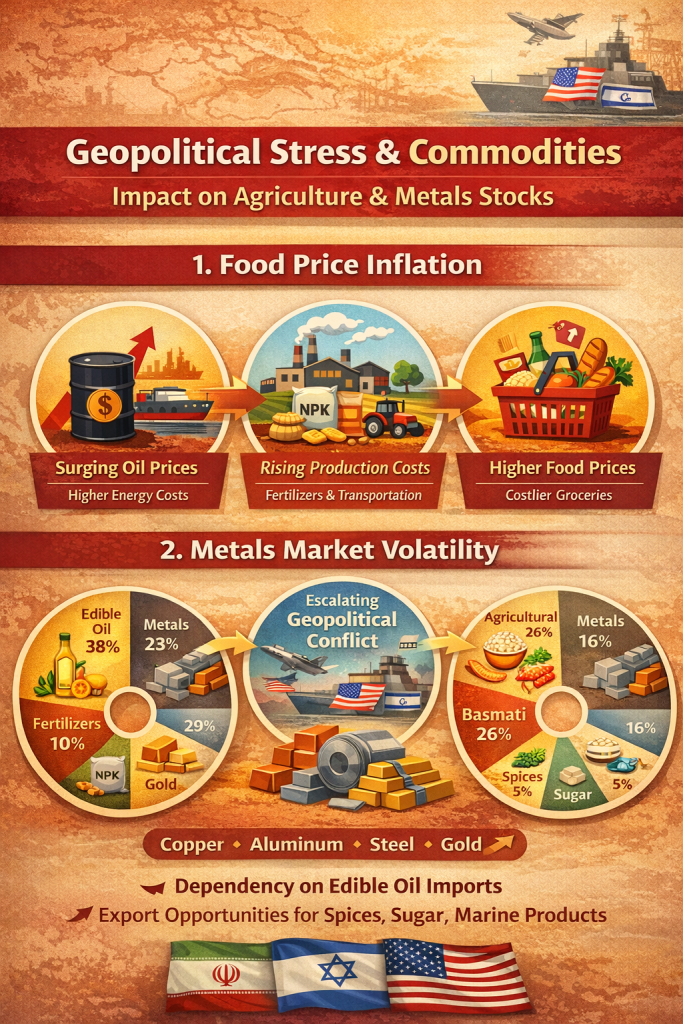
1. Food Price Inflation: A Hidden Impact of Geopolitical Conflict
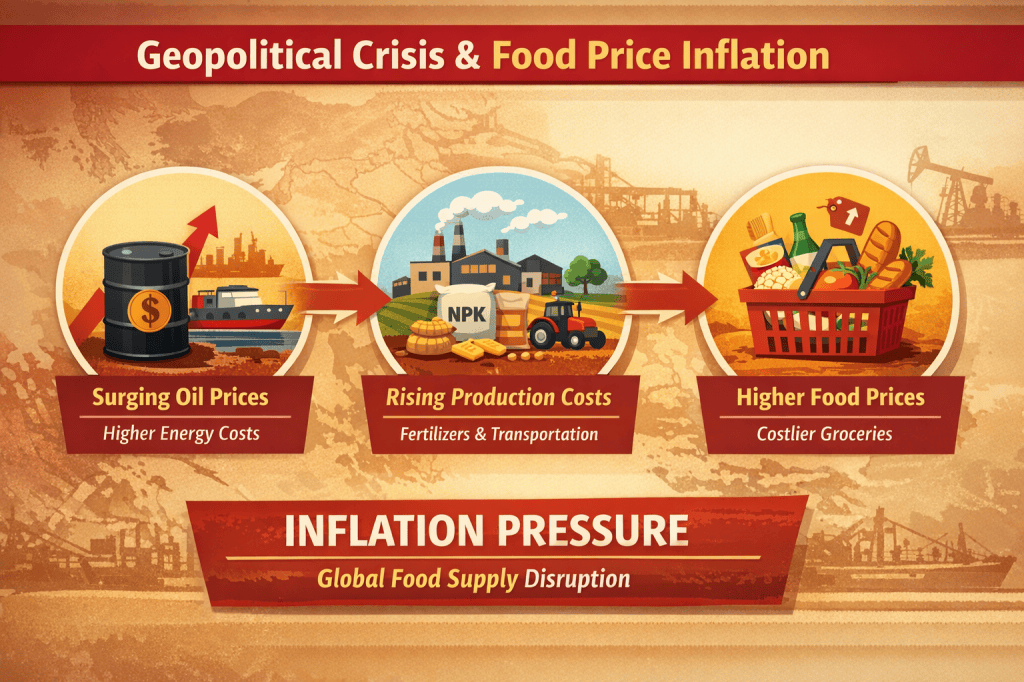
Geopolitical conflicts often lead to supply chain disruptions, rising transportation costs, and higher energy prices—all of which feed into global food inflation.
Oil prices have surged sharply due to fears of supply disruptions through the Strait of Hormuz, one of the world’s most critical energy transit routes. Analysts warn that crude prices could even exceed $100 per barrel if disruptions intensify, increasing costs across the global economy. (The Guardian)
Higher energy prices directly affect agriculture because:
- Fertilizer production depends heavily on natural gas
- Transportation costs rise for food distribution
- Farm input costs increase
If fertilizer and fuel prices rise, food production becomes more expensive, eventually pushing retail food prices higher. Global institutions warn that energy shocks from geopolitical conflicts often translate into food price inflation worldwide. (World Bank)
Recent signs of this pressure are already visible. In parts of India, edible oil prices have started rising amid concerns over global supply disruptions linked to the conflict. (The Times of India)
Implications for Agriculture Stocks
Rising food prices can benefit certain agricultural companies, particularly those involved in:
- Agrochemicals
- Fertilizers
- Agricultural trading
- Food processing
However, the benefit depends on whether companies can pass on rising input costs to consumers.
2. Metals Demand and Global Economic Growth
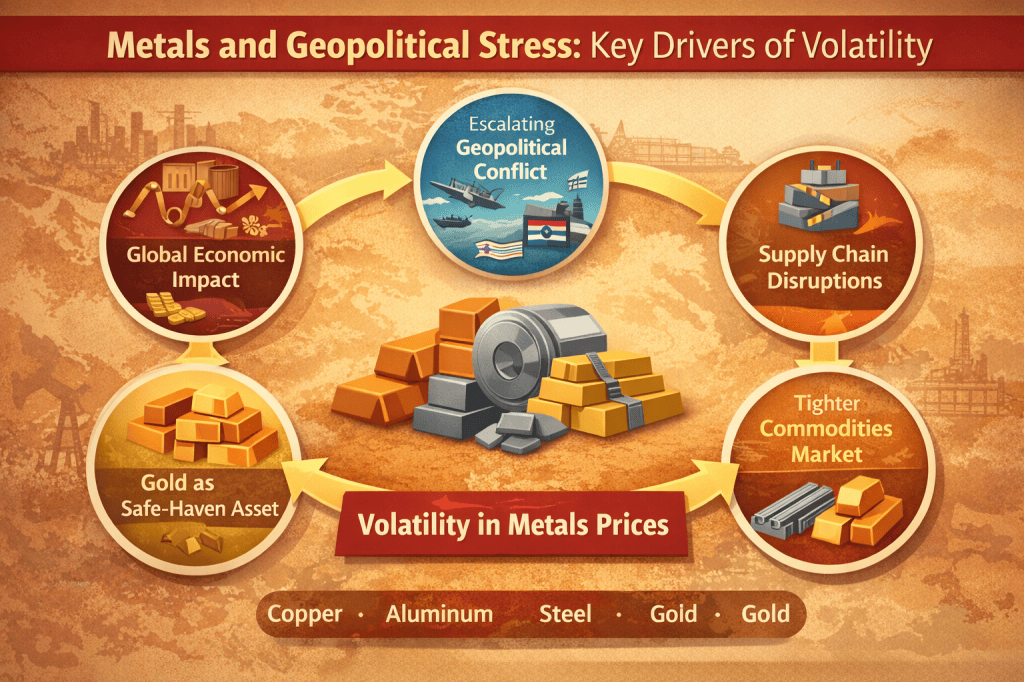
Unlike food commodities, metals are closely tied to global industrial activity.
When geopolitical tensions escalate:
Two opposing forces emerge:
1. Economic slowdown risk
- Trade disruptions
- Slower manufacturing activity
- Reduced industrial demand for metals
2. Strategic and infrastructure spending
- Defense spending increases
- Governments invest in supply chain security
- Infrastructure and energy transition investments continue
This creates volatility in metals like:
- Copper
- Aluminum
- Zinc
- Steel
At the same time, gold often benefits from geopolitical uncertainty as investors shift to safe-haven assets. (World Bank)
Implications for Metals Stocks
In India, metals companies are highly sensitive to global demand cycles.
If the conflict weakens global growth:
- Base metals may face demand pressure
- Steel exports could slow
However, if commodity prices remain elevated due to supply disruptions, metals companies may still maintain strong margins.
3. India’s Import–Export Mix: A Critical Factor
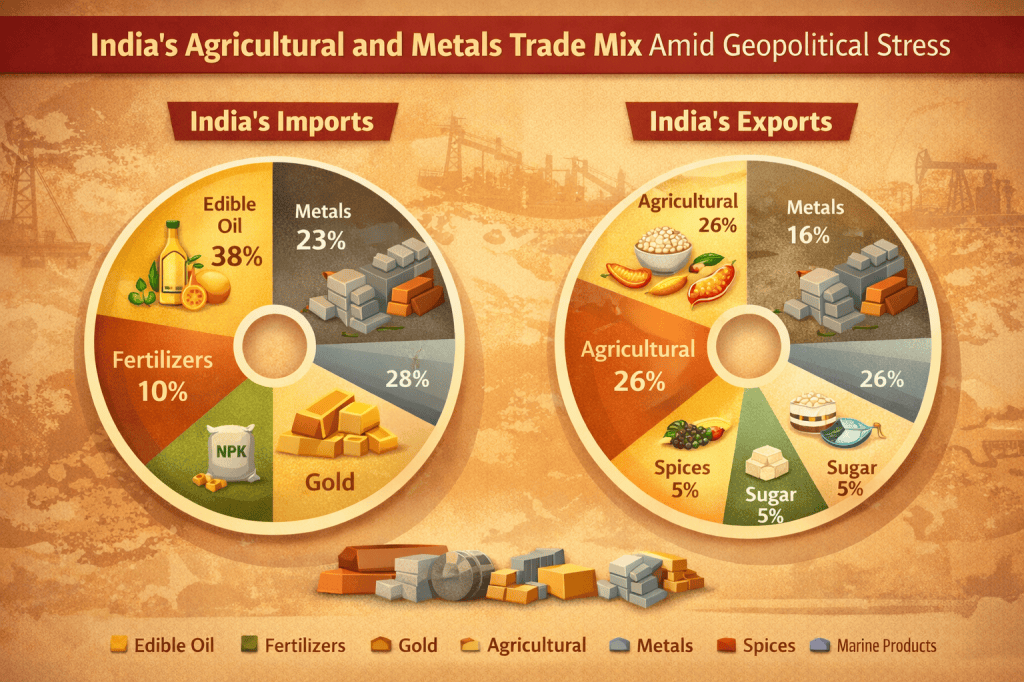
India’s commodity exposure is shaped by its trade structure.
Agricultural Trade
India is a major exporter of several agricultural products, including:
- Basmati rice
- Spices
- Marine products
- Sugar
At the same time, the country depends heavily on imports for key agricultural commodities, especially edible oils, which form the largest agricultural import category. (GSpedia)
This creates a mixed impact:
Positive effects
- Higher global prices can boost export revenues.
Negative effects
- Rising edible oil and fertilizer prices increase inflation.
Metals and Industrial Trade
India is both a producer and importer of metals.
Key characteristics:
- Steel exports depend on global construction demand
- Copper and aluminum prices track global industrial activity
- Infrastructure spending within India can partially offset global weakness
However, trade disruptions caused by geopolitical conflict—such as shipping delays and rising freight costs—can affect commodity flows worldwide. (The Washington Post)
4. Sectoral Impact on Indian Stock Markets
The current geopolitical environment could lead to sector rotation in equity markets.
Potential Beneficiaries
- Fertilizer companies
- Agrochemical firms
- Commodity traders
- Gold-related businesses
Potentially Vulnerable Sectors
- Export-oriented metals companies
- Companies sensitive to global industrial demand
- Industries dependent on imported commodities
Commodity cycles are inherently volatile during geopolitical crises, and market reactions often shift quickly based on developments in the conflict.
5. Key Takeaway for Investors
Geopolitical conflicts typically trigger commodity market shocks, which then flow through to inflation, trade balances, and corporate earnings.
For India, the impact of the current Middle East crisis could unfold through three major channels:
- Higher food inflation due to rising energy and fertilizer costs
- Volatility in metals demand linked to global economic growth
- Trade balance pressures from rising commodity imports
Investors should therefore closely monitor commodity prices, shipping routes, and global economic indicators when evaluating agriculture and metals stocks during periods of geopolitical stress.
Conclusion
While the immediate market reaction to geopolitical conflicts is often seen in oil prices and equity volatility, the deeper impact usually emerges through commodities.
Food prices, metals demand, and trade flows are all interconnected with geopolitical developments. For India, balancing food security, inflation control, and export competitiveness will remain a critical challenge as global tensions continue to influence commodity markets.
Understanding these dynamics can help investors navigate volatility and identify opportunities across agriculture and metals sectors.
Disclaimer
This article is for informational and educational purposes only and should not be considered financial or investment advice. The views expressed are based on publicly available information and market observations. Investors should conduct their own research or consult a qualified financial advisor before making any investment decisions.


Leave a Reply