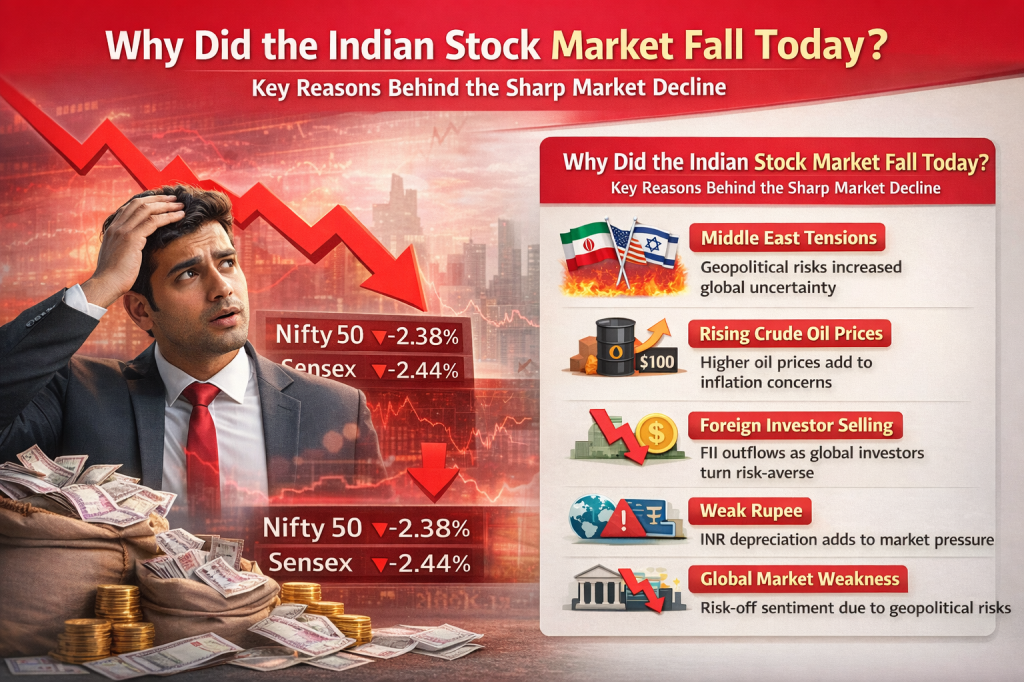
Indian stock markets witnessed a sharp decline today, with benchmark indices experiencing heavy selling pressure. The Nifty 50 and Sensex dropped significantly during the session, wiping out several lakh crores of investor wealth in a single day.
The fall was driven by a combination of global geopolitical tensions, rising crude oil prices, foreign investor selling, and currency weakness. Let’s break down the key reasons behind today’s market decline.
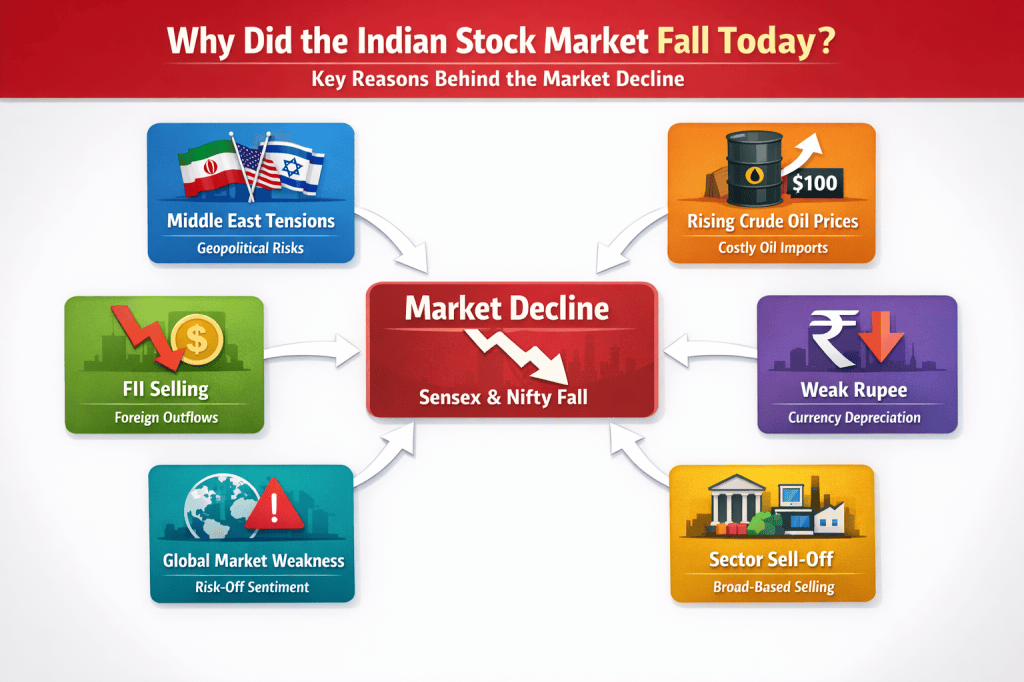
1. Escalating Middle East Tensions
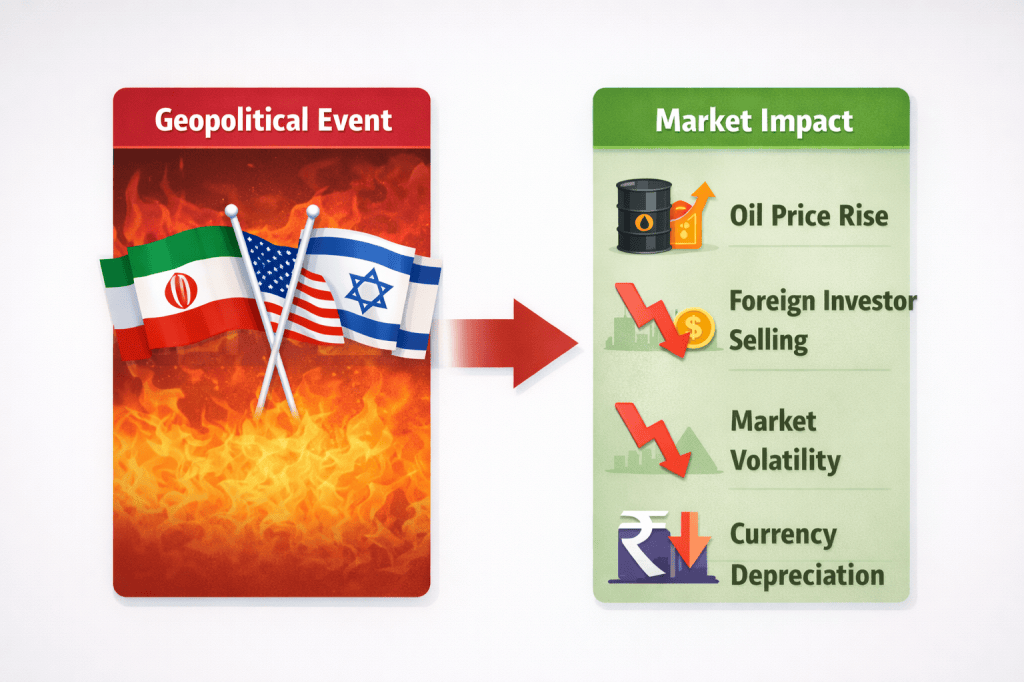
One of the biggest triggers behind today’s market fall is the escalating geopolitical tensions in the Middle East involving Iran, Israel, and the United States.
The conflict has increased concerns about:
- Global energy supply disruptions
- Potential escalation into a broader regional conflict
- Instability in global financial markets
Whenever geopolitical tensions rise, global investors tend to move money away from risk assets such as equities into safer assets like gold, US bonds, or cash, which negatively impacts emerging markets like India. (Angel One)
2. Surge in Crude Oil Prices
Crude oil prices have surged sharply due to fears of supply disruptions in the Middle East and possible threats to shipping routes such as the Strait of Hormuz.
Reports indicate that crude oil prices have moved above the $100 per barrel level, which is a major concern for India because the country imports more than 80% of its crude oil requirement. (The Times of India)
Higher oil prices lead to:
- Rising inflation
- Higher import bills
- Pressure on government finances
- Weakening of corporate profitability
Energy-intensive sectors such as aviation, paints, logistics, and chemicals are especially sensitive to rising oil prices.
3. Continuous Foreign Institutional Investor (FII) Selling
Another major factor behind the market fall is persistent selling by Foreign Institutional Investors (FIIs).
Global funds tend to reduce exposure to emerging markets during periods of uncertainty. Currently, investors are concerned about:
- Rising geopolitical risks
- Higher global interest rates
- Currency volatility
This has resulted in heavy outflows from Indian equities, putting pressure on benchmark indices. (India Today)
4. Weakening Indian Rupee
The Indian Rupee has also been under pressure, depreciating against the US Dollar amid global risk aversion.
A weaker rupee can negatively affect the market because:
- It increases import costs
- Raises inflation risk
- Reduces foreign investor returns in dollar terms
Currency weakness often triggers additional FII selling, amplifying market volatility.
5. Global Market Weakness and Risk-Off Sentiment
The sell-off in Indian markets also mirrored weakness in global markets.
Global investors are currently cautious due to:
- Rising geopolitical risks
- High energy prices
- Tight global monetary conditions
- Slowing global growth expectations
During such periods, investors prefer safer assets over equities, which leads to broad-based market corrections.
6. Broad-Based Sectoral Selling
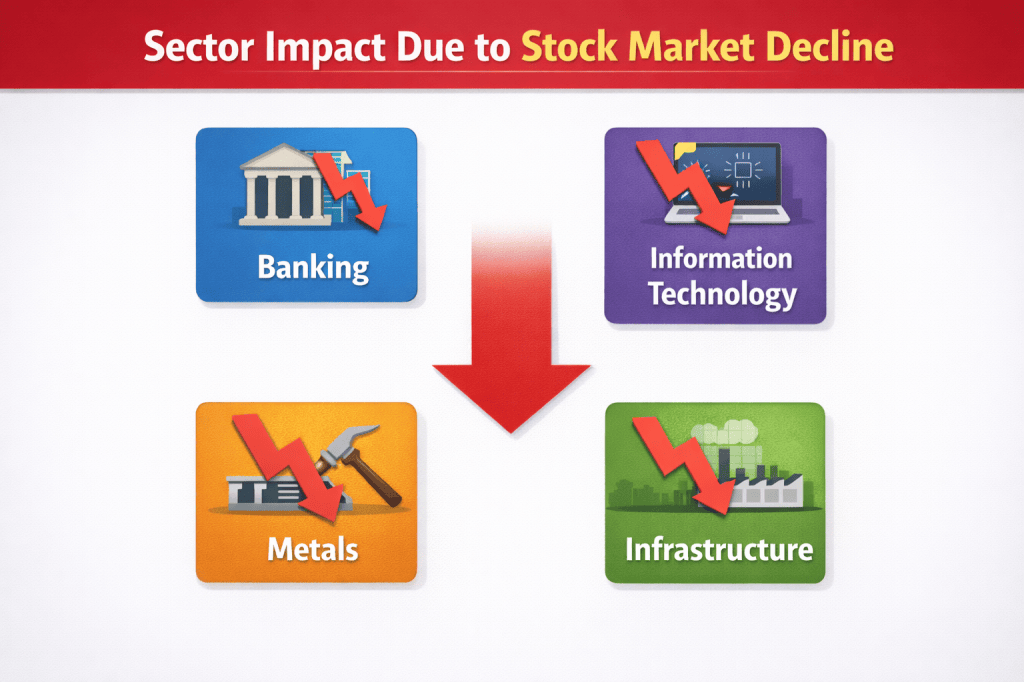
Today’s market fall was broad-based, with heavy selling seen across multiple sectors including:
- Banking and financial stocks
- IT companies
- Metal stocks
- Infrastructure companies
When large-cap stocks across sectors decline simultaneously, benchmark indices tend to fall sharply.
What Should Investors Do?
Historically, geopolitical events tend to cause short-term volatility rather than long-term market damage.
Long-term investors should:
- Avoid panic selling
- Focus on fundamentally strong companies
- Maintain diversification
- Continue systematic investments (SIPs)
Market corrections often create opportunities for disciplined investors.
Conclusion
Today’s fall in the Indian stock market is largely driven by global geopolitical tensions, rising crude oil prices, foreign investor outflows, and currency weakness. While such developments can trigger short-term volatility, the long-term outlook of the Indian economy and equity markets remains structurally strong.
Investors should remain cautious in the near term while keeping a long-term perspective.
Disclaimer
The information provided in this article is for educational and informational purposes only and should not be considered as investment advice. The stock market is subject to risks and uncertainties. Investors should conduct their own research or consult a qualified financial advisor before making any investment decisions.


Leave a Reply